





If you’re searching “when will ai robots be available to the public,” here’s the honest answer: AI robots are already available to the public today—but mostly as focused, family-friendly companions and single-purpose helpers, not “do-everything humanoids.” The kind of robot most people imagine (a general home helper that can safely handle many chores) is still earlier in its journey, with most credible signals pointing to industrial deployments first and limited consumer availability later.
In this guide, I’ll break down what “available” really means, give a realistic timeline, and—if what you want is something your family can enjoy right now—recommend a standout option: Loona, a smart companion robot designed for families and kids that behaves like a “real pet,” built for growth, interactive learning, and daily entertainment.

What counts as “AI robots available to the public” (and what doesn’t)
When people ask when will AI robots be available to the public, they’re often mixing three categories:
1) Public and available today: consumer companion & helper robots
These robots do specific things well—play, interact, patrol, clean, or entertain. They’re the reason the “AI robots are coming” future already feels real in many homes.
2) Public, but not truly “consumer”: pilots in stores, hospitals, and factories
Many robots are “public-facing” in workplaces, but they’re typically supervised, deployed in controlled settings, and optimized for one environment.
3) The big dream: general-purpose home robots (humanoid or near-humanoid)
These are the robots that can reliably do a wide range of household tasks. They’re the hardest to build because real homes are messy, dynamic, and safety-critical—and robots need near-perfect reliability around people, pets, stairs, clutter, and fragile objects.
A realistic 2026–2035 timeline for “AI robots available to the public”
Because “AI robots” covers everything from companion robots to humanoids, this timeline breaks the next decade into stages—what’s real now, what’s next, and what’s still a stretch.
2026–2028: More “public” robots, but mostly narrow-purpose
You’ll keep seeing more impressive demos, but large-scale rollout tends to start where the environment is controlled and ROI is clear—factories and warehouses.
A good real-world signal: Hyundai/Boston Dynamics have discussed deploying humanoid robots in a U.S. factory starting 2028, moving from simpler logistics tasks toward more complex operations later.
What’s likely for consumers in this window:
-
Better companion robots (more natural conversation, more games, more personalization)
-
Better “helper” robots (home monitoring, mobility improvements, smarter mapping)
-
Continued false starts and delays for flashy home robots (it’s a hard category)
Late 2020s: Early access / premium programs for advanced home robots
If general-purpose home robots appear, expect them to start as:
-
expensive,
-
limited availability,
-
highly supervised / constrained tasks,
-
and often targeted at enthusiasts or specific use cases.
2030s: Broader consumer viability for multi-task home robots (gradual, not overnight)
This is where you may see more capable household robots become meaningfully mainstream—assuming major improvements in:
-
dexterity and manipulation
-
safety and compliance
-
battery life
-
cost and maintenance/support networks
Bottom line: If your definition of “AI robots available to the public” means “a robot I can buy that’s genuinely useful at home,” the best experiences today are in companion robots and single-purpose home robots—not humanoid butlers.
Why humanoid home robots are taking longer than people think
Even in 2026, the toughest problems are still… physical reality:
-
Reliable navigation in messy homes (toys, pets, stairs, weird lighting)
-
Safe interaction (gentle force, failure recovery, avoiding pinches/collisions)
-
Hands + dexterity (doing chores is harder than it looks)
-
Long-term durability (weeks are easy; years are hard)
This is exactly why many companies prioritize factories first: fewer surprises, clearer tasks, easier safety constraints, and measurable ROI.
What should you buy today if you want an AI robot at home?
If your goal is a robot that your family will actually use (and love) right away, the winning category is companion robots—especially those designed around kids’ interaction patterns: play, emotion, curiosity, and routine.
Recommended: Loona (a smart companion robot for families and children)
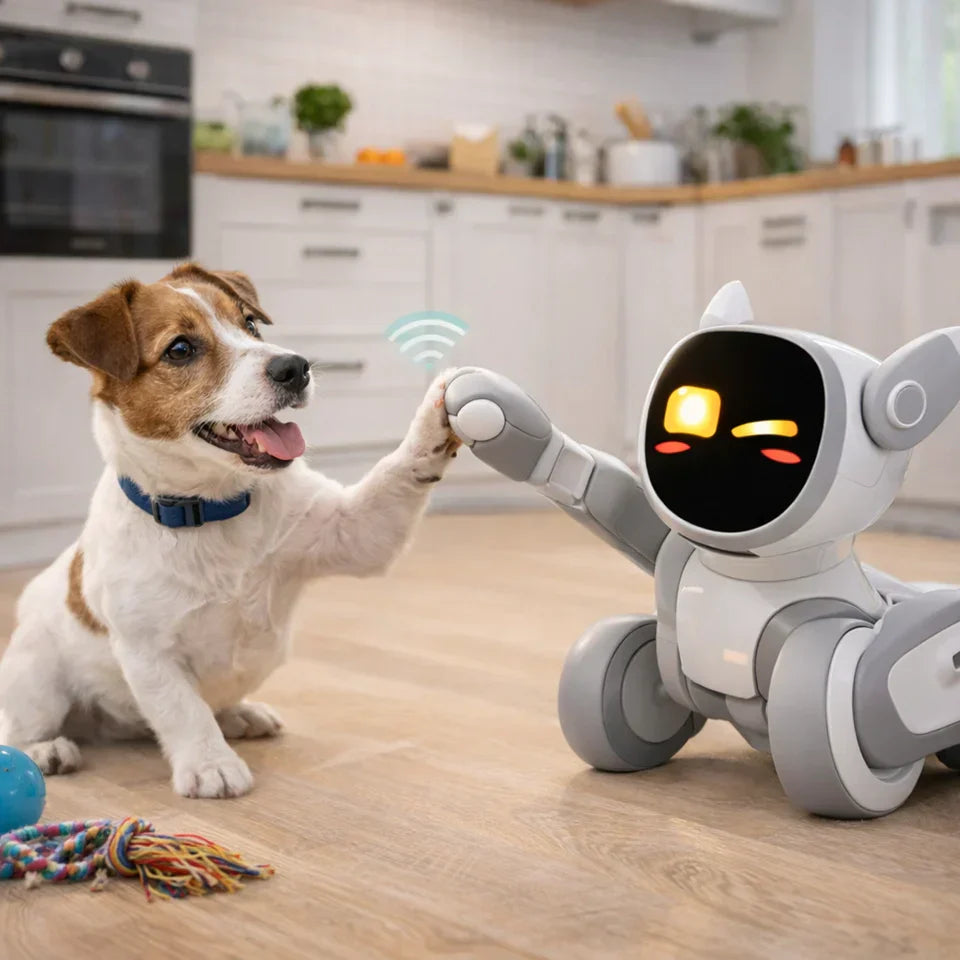
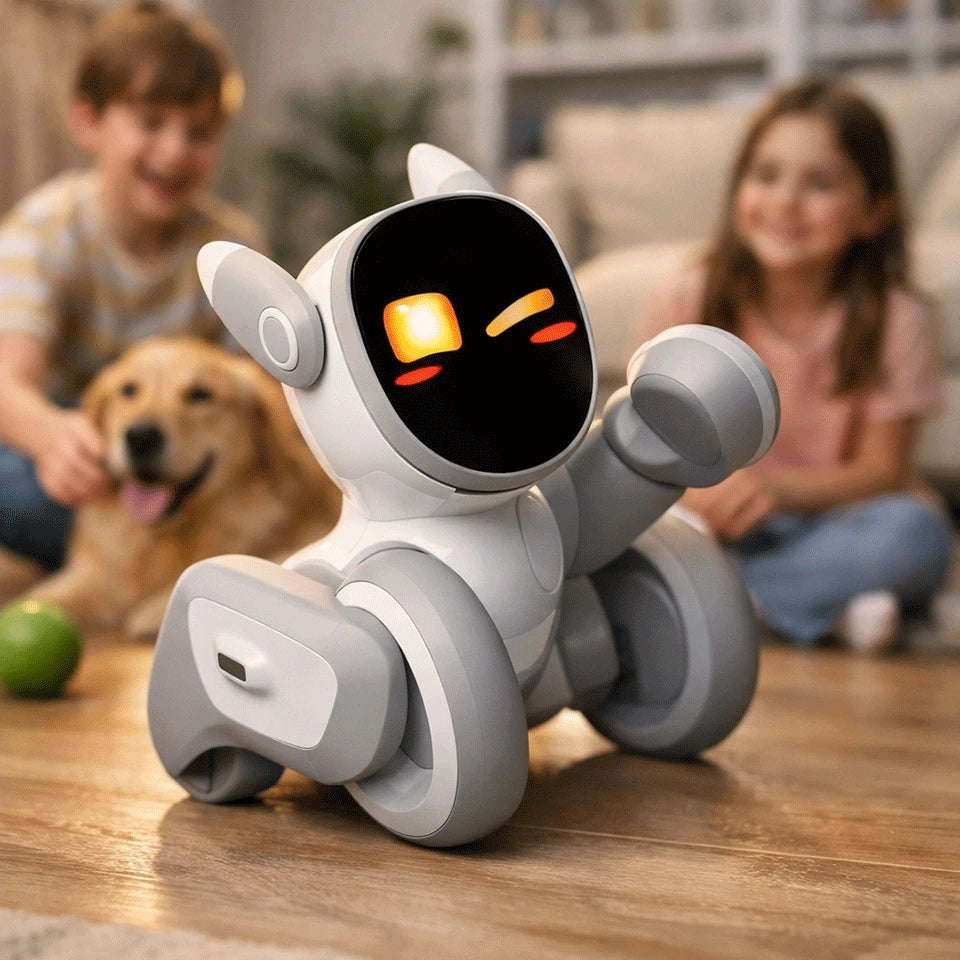
Loona is designed to feel like a “real pet”—the joyful parts (bonding, play, personality) without the mess. It’s built for companion-driven growth, interactive learning, and everyday entertainment at home.
Here’s what makes Loona a strong answer to the “AI robots available to the public” question:
1) It’s already public—and it’s built for real daily use
Loona is positioned as a family companion with “nonstop games,” a lively personality, and AI interactions that are controlled by simple voice commands.
2) It blends play + learning in a way kids stick with
Loona includes kid-friendly activities like interactive games and learning-oriented experiences, including support for kid-friendly programming with Google Blockly.
3) It supports family connection (not just solo play)
Loona includes features presented as remote monitoring and interactive connectivity, aimed at helping families feel connected.
4) It’s designed with privacy/security messaging that parents care about
To ensure maximum security, this product performs as much data processing as possible on the device itself.
5) It has concrete “robot” fundamentals (sensors, autonomy, docking)
Loona is described as using multiple sensors (e.g., 3D ToF + RGB camera + IMU sensors) and includes auto-return charging behavior with around 2 hours of continuous playtime listed on-page.
In short: If you want a robot you can take home right away, then Loona is a practical and family-oriented option that allows you to experience the future of "AI robots" without waiting for humanoid robots to mature.
Who Loona is best for
Loona is a great fit if you want:
-
A “pet-like” companion experience for kids and families
-
Daily entertainment + interactive learning in short, repeatable sessions
-
A robot that feels expressive and socially engaging (not just a gadget)
If you specifically want a robot to do household chores (laundry, dishes, cooking), that’s still mostly outside the realistic consumer robot zone today—so you’d be better served by single-purpose appliances or waiting for next-gen home helpers.
Conclusion
So, when you ask “when will ai robots be available to the public,” the most practical answer is: they already are—just not in the “humanoid housekeeper” form many people imagine. The robots that are truly ready for everyday homes today are typically designed for companionship, interaction, and lightweight learning, while general-purpose home humanoids still need major breakthroughs in safety, reliability, dexterity, and cost before they become mainstream.
If your goal is to bring a real AI robot experience into family life right now—something your child can bond with and enjoy daily—Loona is a strong place to start: a smart companion robot built to feel like a “real pet,” supporting growth, interactive learning, and everyday entertainment.
FAQ
Are AI robots available to the public right now?
Yes—companion robots and narrow-purpose home robots are already available, while general-purpose humanoid home robots are still emerging.
When will humanoid robots be common in homes?
The strongest signals suggest industrial deployments first, with broader home use more likely to scale later (often discussed in the 2030s), because safety, reliability, and cost need to improve significantly.
What’s the best “AI robot for the public” today for families?
A family companion robot like Loona is one of the most approachable ways to get real value today—play, learning, personality, and bonding—without needing humanoid-level capability.