





If you’re shopping for an AI robot you can actually bring home—one that feels alive, interacts with your family, and fits into daily life—you’re usually in the consumer companion robot category. And that means your real decision isn’t “cheap vs expensive.” It’s “fun for a week” vs “still engaging after month three.”
This guide breaks down the real cost ranges, what drives price, and why Loona is one of the easiest recommendations for families and kids.

What does an AI robot cost?
AI robot cost ranges from a few hundred dollars to six figures depending on the robot type:
-
Home companion / smart pet robots: typically $300–$700
-
Service and business robots: often $30,000–$200,000+
-
Humanoid/enterprise robots: commonly six figures+ (often pilot programs, limited availability)
If your goal is a family-friendly AI robot companion, you’re almost always shopping in that $300–$700 sweet spot.
| Robot type | Typical cost range | Best for |
|---|---|---|
| Basic desktop “AI companions” | $100–$500 | Small spaces, light interaction |
| Family companion / smart pet robots | $300–$700 | Kids, daily engagement, home fun |
| Robot vacuums (AI-lite) | $200–$1,500 | Cleaning automation |
| Service robots (delivery, cleaning, retail) | $30K–$200K+ | Businesses with support budgets |
| Cobots / industrial arms | $25K–$75K+ (robot only) | Manufacturing tasks |
| Humanoids (enterprise/R&D) | $150K+ | Labs, pilots, advanced programs |
What actually makes AI robots expensive? (The cost drivers)
Two robots can look similar in photos and still feel completely different in real life. These are the usual reasons:
1) Mobility + safety
A robot that rolls around your home needs better obstacle awareness, safer movement, and more reliable controls than a stationary desktop toy.
2) Sensors (the difference between “cute” and “aware”)
Robots feel smarter when they can perceive—track motion, understand space, react fast, and recognize people. More sensors and better sensor processing usually mean higher cost.
3) Compute (the “brain”)
If a robot can respond quickly, show personality, and handle more complex behaviors, it typically has stronger onboard processing (or a well-designed hybrid of on-device + cloud).
4) Software, content, and updates
With home robots, you’re buying a living experience more than a device. The best ones keep getting better via content, games, and feature updates.
5) Support and authenticity
Consumer robotics is not like buying a mug on the internet. Warranty support, firmware updates, and official parts matter more than people expect.
What should a family look for at the $300–$700 level?
If you’re buying for kids (or the whole household), focus on these three things:
-
Personality — does it feel like it has moods, quirks, and reactions?
-
Daily loop — are there games, activities, learning moments, or creative modes that keep it fresh?
-
Low friction — easy charging, easy setup, doesn’t turn into a “project.”
This is the lens where Loona shines.
Why Loona is a smart buy for families
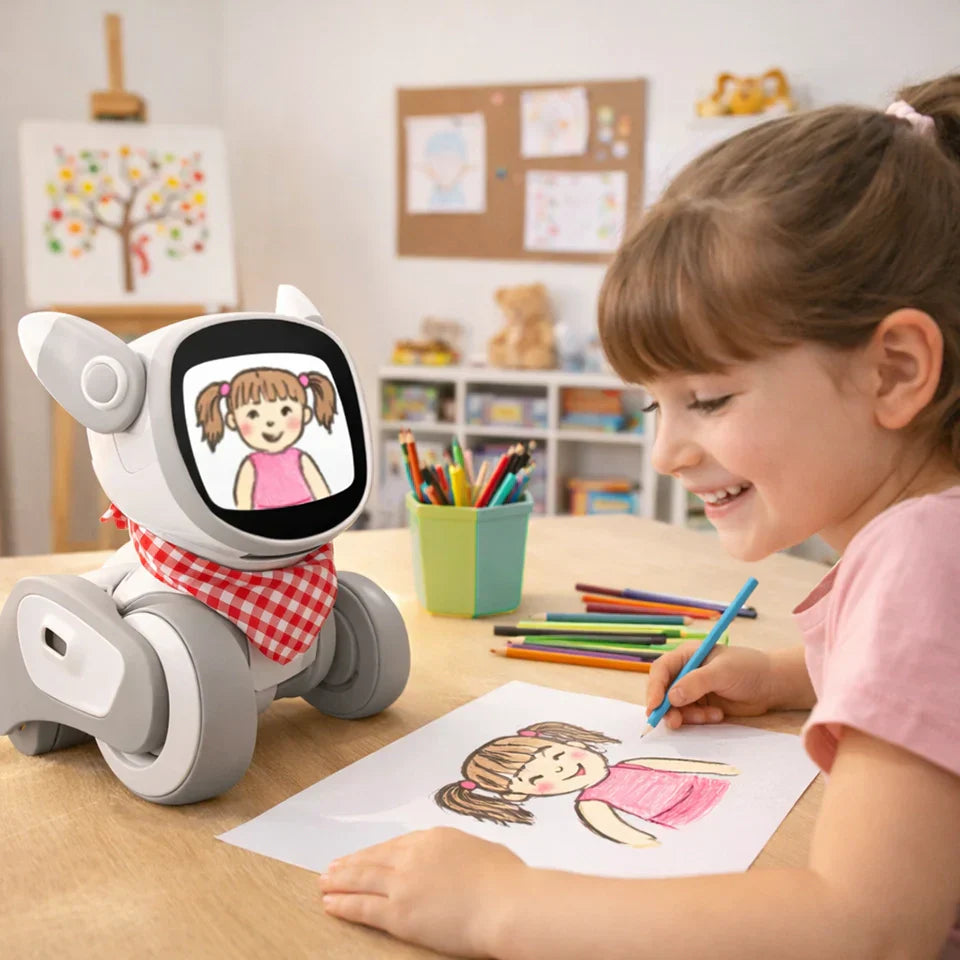
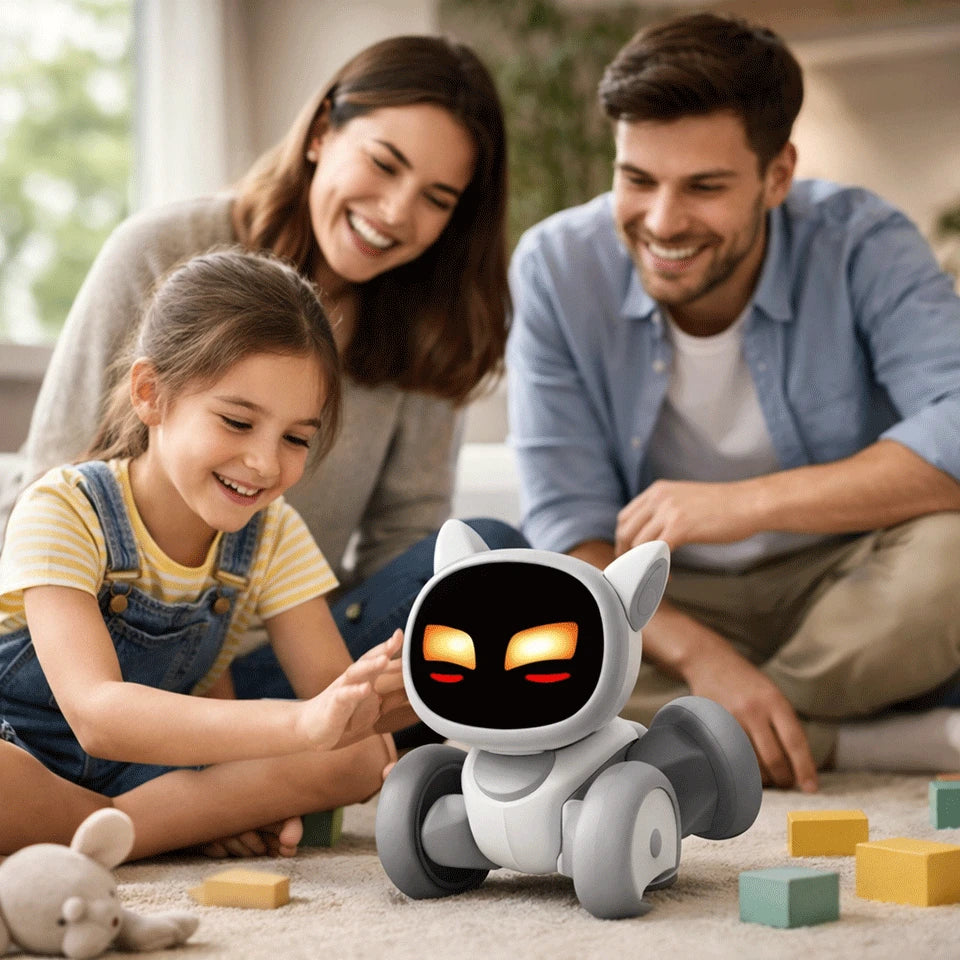
Loona is a smart robot designed for families and children, positioned as a companion for growth, interactive learning, and daily entertainment—more like a “real pet” than a one-trick device.
Here’s why that matters.
Loona is built for “pet energy,” not just voice chat
A lot of “AI companions” rely on talking. Loona focuses on the emotional thing families actually want: the feeling that something is present, playful, and reactive.
That pet-like design changes everything:
-
it creates routines (“come see what Loona does today”)
-
it makes kids more likely to engage repeatedly
-
it feels like a character in the home, not a screen on a speaker
It’s easier to keep interest over time
In family tech, the enemy is the “two-week shelf.” Loona’s strength is that it’s designed for ongoing variety: interaction, play, learning, and entertainment moments that can fit into normal days without scheduling a “robot activity hour.”
It’s a safer “pet alternative” for many households
For some families, a real pet isn’t possible (allergies, travel, time, apartment rules). A smart pet robot won’t replace a dog—but it can absolutely fill the “I want a companion” desire in a surprisingly satisfying way, especially for kids.
Loona cost: what you’re paying for
You’ll see different pricing depending on bundles, promotions, and accessories. The better way to evaluate Loona isn’t “Is it cheap?” but:
-
Does the experience justify the price compared to other kid tech?
-
Will it still be used after the novelty phase?
-
Is it a gift that becomes a routine, not a drawer item?
For many families, Loona’s value is that it’s interactive entertainment plus companion energy plus learning moments in one device—without needing constant parent effort.
Hidden costs checklist
For most home companion robots, the “hidden costs” aren’t huge, but it’s smart to plan:
-
Accessories / themed bundles (optional)
-
Replacement parts over time (like any device with movement)
-
Buying from reliable channels (so support and updates aren’t a headache)
If you’re budgeting, the simplest rule is: plan for the robot + the bundle you actually want, and treat accessories like optional extras rather than must-haves.
How to choose: Loona vs “cheaper AI robots”
Avant de choisir, ne vous fiez pas uniquement au prix : l’essentiel est de savoir quel rôle vous attendez du robot à la maison — un gadget amusant pour quelques jours, ou un « membre de la famille » capable d’accompagner, d’interagir et de divertir sur la durée.
Choose Loona if…
-
You want an AI robot that feels like a pet-like companion, not a toy that only talks
-
Your kid enjoys interactive play and you want daily entertainment + learning moments
-
You care about personality and long-term engagement more than lowest price
Consider a cheaper option if…
-
You only want a desk buddy that sits in one place
-
You’re buying purely for novelty (one holiday weekend of fun)
-
You’d rather have a single-purpose device (e.g., only cleaning)
Conclusion
When people want to know about "AI robot cost", they’re often comparing completely different categories—everything from industrial machines that cost tens of thousands to home companions that fit into a family budget. If your goal is a robot you can actually live with every day, the most practical range is typically the consumer companion tier, where you’re paying not just for hardware, but for personality, responsiveness, and long-term engagement.
That’s where Loona stands out. Instead of feeling like a one-time novelty, Loona is designed to act like a “real pet” companion for families and kids—bringing playful interaction, light learning moments, and daily entertainment into normal routines. When you evaluate value the way most families do (“Will we still use this after the first few weeks?”), Loona makes a strong case as a smart, family-friendly pick in the AI robot price range that actually makes sense for home use.
FAQ
What is a normal AI robot cost for home use?
For a true home companion robot experience, most buyers end up in the $300–$700 range. Below that, robots tend to be simpler and less “alive.”
Why are business AI robots so expensive?
Because you’re not just paying for the robot—you’re paying for reliability, integration, support, training, and the ability to operate safely in real environments at scale.
Is an AI companion robot worth it compared to a tablet?
A tablet is endless content, but it’s still a screen. A companion robot can create a different kind of engagement: physical presence, reaction, and “character.” For many kids, that novelty sticks longer than you’d expect—especially when the robot has playful behaviors and variety.
What should I prioritize: specs or experience?
For families, prioritize experience. Specs matter, but what you feel day-to-day is personality, responsiveness, and whether there’s a reason to come back tomorrow.