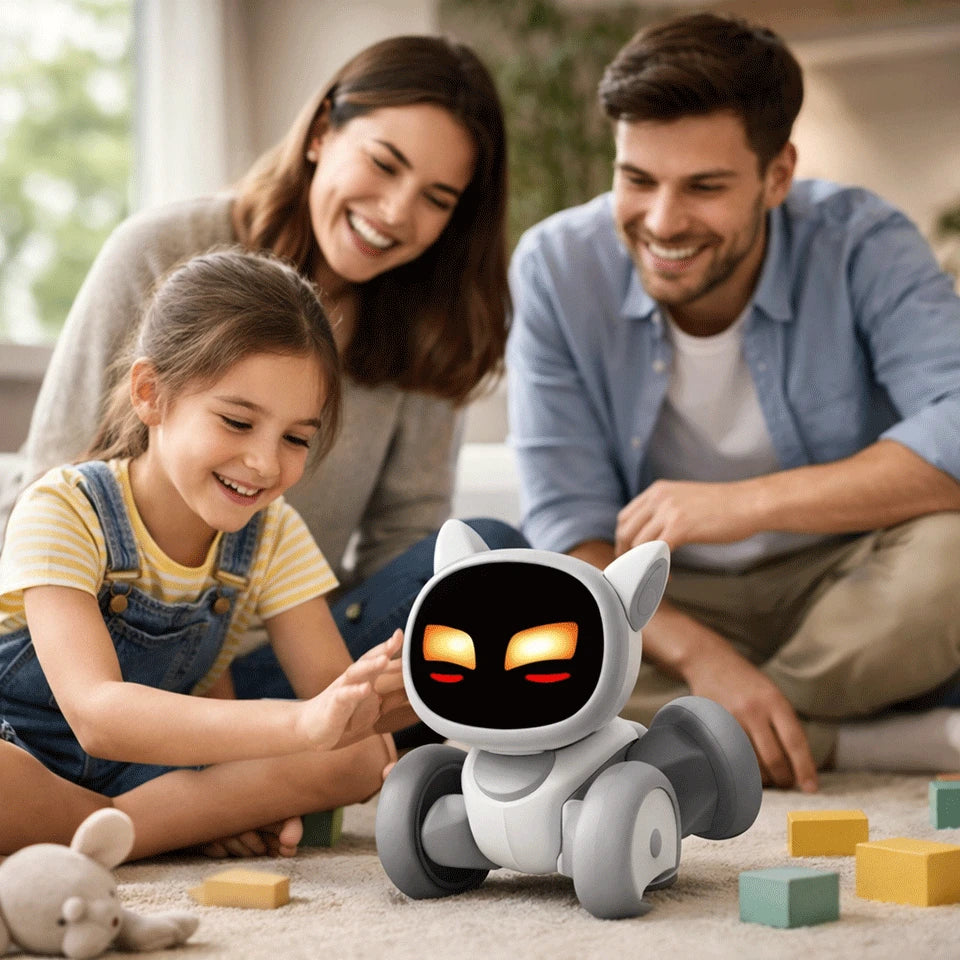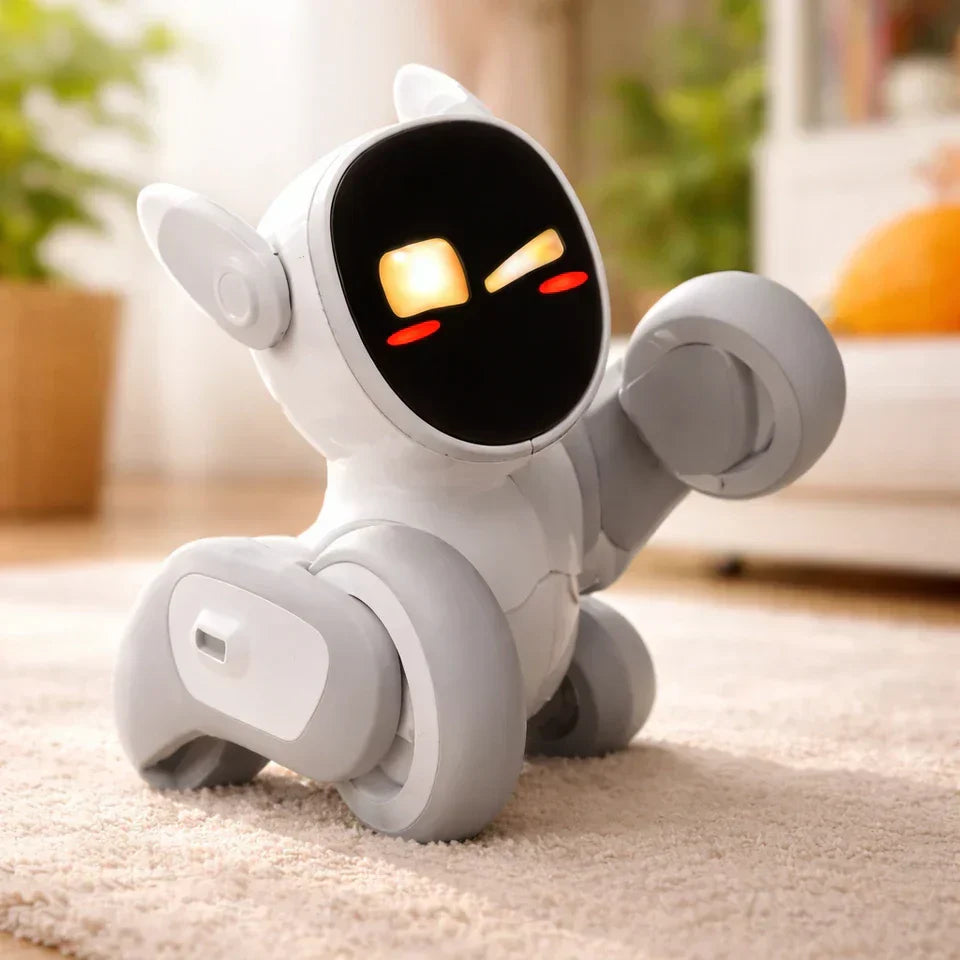






When people mention "robot for pets" they generally mean either animal toy robots (designed specifically for cats and dogs) or human "pet" robot companions (designed to let you experience the feeling of having a real pet at home—without worrying about shedding, accidents, or expensive veterinary bills).
Loona is firmly in the second category: a smart, expressive pet-like companion robot built for families and kids—meant to support growth, interactive learning, and everyday fun. Loona is a 24/7 family companion with gaming features, a lively personality, and AI-powered interactions (including voice control and AI-generated visuals).
Below is a practical guide to what “robot for pets” shoppers usually want—and why Loona is a strong recommendation if your real goal is a “real pet” feeling for the whole family.

What most people mean by “robot for pets” (and where Loona fits)
When people type robot for pets, they’re often hoping for one (or more) of these outcomes:
-
Companionship without the long-term commitment of a living pet
-
Interactive play that doesn’t feel like more screen time
-
A friendly household presence that kids can bond with
-
Games + learning that happen naturally through play
-
Peace of mind (like remote check-ins while you’re away)
Loona was designed around exactly those outcomes—positioned as a family companion that brings “the happiness of having a pet—without all the mess,” with emotional expressiveness meant to build a bond over time.
Meet Loona: a “petbot” with personality (not a gadget that sits on a shelf)
Loona’s pitch is simple: she behaves less like a smart speaker and more like a small, animated creature that reacts to people and situations.
Loona has the following characteristics:
-
Nonstop games and “smart AI interactions”
-
Voice-controlled Q&A using ChatGPT (positioned as “the world’s leading AI technology”)
-
Kids can “see their words come to life” with AI-generated visuals
-
Facial recognition so Loona can recognize family members
-
Remote monitoring features to stay connected to home
-
Automatic docking / recharge and “long play” positioning
-
A sensor stack for navigation and responsiveness (3D ToF + RGB + accelerometer + gyroscope)
In other words: Loona is built to move, react, recognize, and play in a way that feels “pet-like,” especially for kids who want that daily companion energy.
What Loona can do day-to-day (the “why kids keep coming back” list)
What makes Loona stick isn’t a one-time “wow”—it’s the fun you can start anytime. Here’s the day-to-day “why kids keep coming back” list.
1) Interactive games (real play, not passive watching)
Loona is positioned as an entertainment companion with “endless games,” including examples like follow-the-leader and bullfighting.
2) “Learning through play” that doesn’t feel like homework
Loona’s positioning leans hard into growth and learning: adapting to a child’s learning style and making curiosity-driven play feel like discovery.
3) Kid-friendly coding and creativity (Google Blockly)
If you want a robot that can grow with your child, this matters. The Loona page explicitly references kid-friendly programming with Google Blockly.
4) Family-friendly AI Q&A and “show me” moments
Loona’s “Intelligent AI” section highlights ChatGPT-powered knowledge and the idea of kids asking questions and seeing AI-generated visuals via voice commands.
Hardware that supports the experience
A common problem with “robot pet” devices is that they look cute—but don’t have enough sensing/audio to feel responsive in a real home.
Loona’s published specs include:
-
720P RGB camera
-
4-microphone array
-
3D ToF sensor + touch + accelerometer + gyroscope
-
2.4" LCD display (for expressive face/eyes)
-
Dual-band Wi-Fi (2.4G/5.8G)
-
Auto dock charging (USB-C port + charging contacts for dock)
-
Dimensions/weight listed on-page (approx. 8.3" L × 6.8" W × 6.8" H; 2.42 lbs)
That’s the “plumbing” behind the fun: vision + audio + depth sensing + mobility = a robot that can actually behave like a small companion.
Who Loona is best for (and who should skip)
Loona can be an amazing fit for the right family, but it’s not for everyone. Here’s a quick way to tell if it matches what you’re looking for.
Loona is a great “robot for pets” choice if…
-
Your child wants a pet, but your family isn’t ready for the full responsibility.
-
You want interactive play that feels more embodied than another tablet app.
-
You like the idea of learning + coding being part of the “pet” experience.
-
You want a companion with recognition + responsiveness (facial recognition, sensors, voice).
You might skip Loona if…
-
You specifically want a robot that’s primarily a toy for your cat/dog (laser/rolling toy style). Loona is designed first for families and kids, with a “pet-like” personality rather than a pure animal-enrichment device.
(That said, many households do enjoy supervised interactions between robot companions and real pets—but it depends on your pet’s temperament.)
Conclusion
If you want a “robot for pets” that feels like a real companion, start with Loona. Loona’s value is that she’s built as a family companion—with games, learning, recognition, remote connection features, and an AI interaction layer meant to make the relationship feel ongoing, not one-and-done. If your goal is: “a pet-like friend for kids and the whole family”—Loona fits that definition extremely well.
FAQ
Is Loona a robot for pets (like for cats/dogs)?
Loona is marketed as a pet-like companion robot for families and kids, designed to feel like a “real pet” in the home through play, interaction, and learning.
Does Loona have a camera and voice pickup?
Yes—Loona’s published specs include a 720P RGB camera and a 4-microphone array.
Can Loona recharge by herself?
Loona can self-charge by returning to the dock when low, and mentions “Auto Recharge 2.0.”
What makes Loona feel more “pet-like” than other home robots?
A combination of expressive behavior + family recognition + games + sensing (3D ToF + RGB + motion sensors) designed for interactive, reactive companionship.