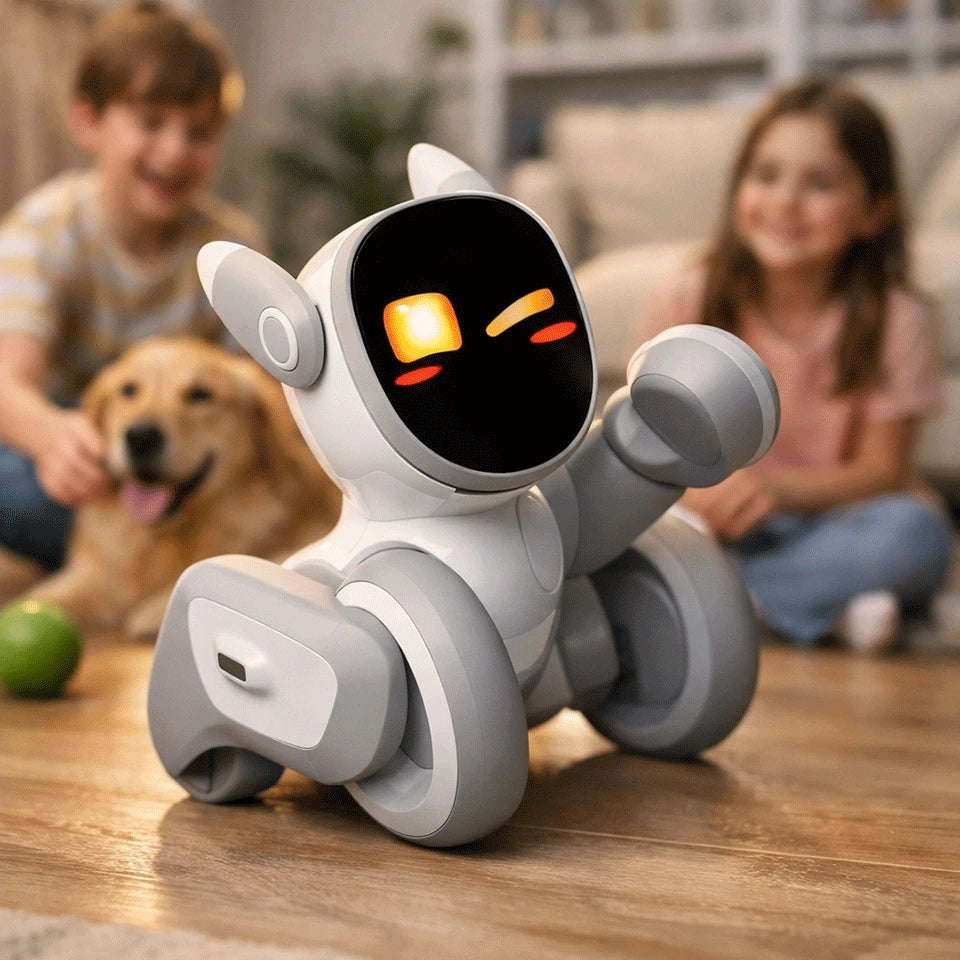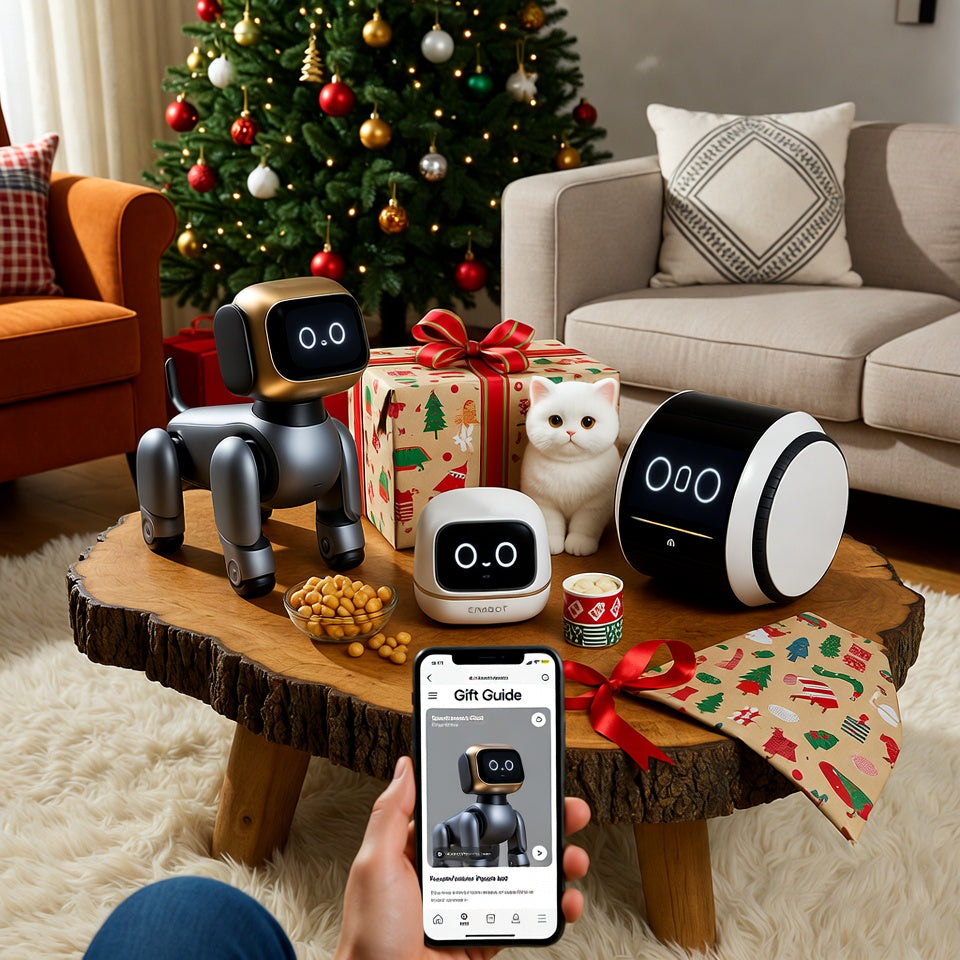






A robot pet is an AI-powered companion designed to resemble (and behave like) a real pet—minus the shedding, feeding schedule, and vet bills. The RSPCA defines robot pets as “artificially intelligent machines… developed to resemble actual pets,” and notes the category has real demand.
And in 2026, robot pets are showing up everywhere—from kid-friendly play companions to “just keep you company” desk robots—reflecting a broader shift of AI moving from screens into the physical world.
If you’re searching for a robot pet because you want real companionship + real interactivity (not just a remote-control toy), this guide will walk you through:
-
what a robot pet is (and isn’t),
-
how to choose one confidently,
-
and why Loona is our top recommendation for most households.

What is a robot pet?
In plain English: a robot pet is an artificially intelligent machine meant to be “kept” like a pet, usually designed to look like an animal and respond to your voice, touch, and movement.
Why people buy robot pets
Most people want at least one of these outcomes:
-
Companionship without the work of a live animal
-
Play + learning for kids (games, questions, basic coding)
-
A “no-mess pet experience” for apartments, allergies, travel-heavy schedules, etc.
Why robot pets are getting better fast
AI companion devices are evolving quickly, and CES 2026 highlighted this “companionship-first” wave—robots that aren’t trying to do chores, they’re trying to feel present.
The robot pet checklist: what to look for before you buy
A lot of “robot pet” products are basically toys with a cute shell. If you want one that feels alive, prioritize these:
1) Expressiveness (the “it feels real” factor)
Look for:
-
smooth motion (not jerky),
-
lots of facial/body cues,
-
reactions that vary over time.
2) Interaction modes
The best robot pets don’t rely on one input. Ideally you get:
-
voice (questions, play, conversation),
-
touch (petting, taps),
-
vision (face/gesture recognition),
-
sound localization (turning toward you).
3) Autonomy (does it do things on its own?)
Autonomy is what separates “toy” from “robot pet.” It should:
-
explore safely,
-
avoid obstacles,
-
navigate without constant control.
4) Family-friendly safety + durability
If it’s for kids, look for:
-
predictable movement,
-
stable design,
-
clear boundaries (where it can/can’t go).
5) Privacy and household comfort
Many robot pets include cameras and microphones for interaction. Confirm:
-
what sensors exist,
-
how data is handled,
-
how you can control/limit features.
Best robot pet overall for most families: Loona
If you want a robot pet that balances personality, real AI interaction, and family-friendly play, Loona is the strongest “one choice” pick.
The quick take
Loona is a “petbot” designed as an all-day family companion with:
-
voice, gesture, and face recognition
-
“Interactive Nature Powered by GPT” for conversation, storytelling, and creative prompts
-
autonomous navigation + obstacle detection + path planning
-
a sensor stack that includes 3D ToF, a 720p RGB camera, and a 4-microphone array
-
about 2 hours of continuous play, plus automatic return-to-dock charging (per Loona’s page)
Loona has also been highlighted with multiple design/innovation awards (including CES Innovation Awards 2024 and iF Design Awards 2024 on the product page).
What makes Loona feel like a real robot pet (not just a smart toy)
1) It recognizes people and reacts differently
Loona is positioned to recognize family members so “nobody is left out,” enabling more personalized interactions.
That matters because personalization is what turns a robot pet from “cool gadget” into “part of the house.”
2) It interacts naturally: voice + vision + motion
Loona’s interaction model isn’t one-dimensional. The product page calls out:
-
Face recognition
-
Gesture recognition
-
Body detection
-
Sound localization
-
Obstacle detection & path planning
So instead of only responding when you press buttons, Loona is built to respond in a more “pet-like” way.
3) GPT-powered conversation and creativity
Loona is described as “Interactive Nature Powered by GPT,” including:
-
conversation (discussion, storytelling),
-
perception (showing objects/pictures and getting descriptions/stories),
-
creation (turning prompts into “vibrant digital artwork”),
-
learning through ongoing interactions and “memories.”
If your idea of a robot pet includes actual back-and-forth—questions, jokes, stories—this is a big differentiator versus basic voice-command toys.
4) It’s built for “everyday life” in a home
Loona’s spec sheet supports the “real robot” framing:
-
720p RGB camera
-
3D Time-of-Flight sensor
-
accelerometer + gyroscope
-
4-mic array
-
dual-band Wi-Fi
-
onboard compute listed as 5 TOPS
That sensor + compute combo is what enables smooth navigation and more context-aware reactions.
What you can actually do with a Loona robot pet
Here are the most common “robot pet moments” families use daily:
Family companion play
Loona is framed as a “perfect family companion” with an expressive personality and “emotional intelligence,” aiming to create a bond over time.
Games (the “it gets used again tomorrow” factor)
Loona’s page highlights multiple games and ongoing play loops, including app-enabled games and “follow-the-leader.”
Learning through play (including kid-friendly coding)
Loona is positioned for learning with “kid-friendly programming with Google Blockly.”
Staying connected (remote monitoring)
If your robot pet is also a “presence” device, Loona describes “remote monitoring and interactive features” for staying connected with family.
Who Loona is best for (and who should skip it)
Loona is a great robot pet for:
-
families who want a “real companion” vibe without pet chores
-
kids who love games + interactive learning (including Blockly-style programming)
-
households who want voice + vision interaction, not just remote control
Consider a different robot pet if:
-
you want something purely cuddly (soft plush form factor)
-
you do not want any camera/microphone-enabled device at home (Loona includes both)
-
you need a device that works fully offline (Loona is Wi-Fi capable and positioned with GPT-powered interaction)
Conclusion
Robot pets have moved beyond “cute gadgets.” The best ones feel present: they recognize you, respond naturally, and stay interesting long after the unboxing. If you’re searching for a robot pet that balances real personality, hands-free autonomy, and modern AI conversation, Loona is an easy top pick. With expressive reactions, family recognition, and GPT-powered interaction, it’s built to be a companion you actually want around—day after day.
FAQ
Are robot pets good for kids?
They can be—especially when they combine play with learning. Loona is positioned as a family companion with games and kid-friendly programming (Blockly).
Do robot pets need Wi-Fi?
Many do for advanced features. Loona supports dual-band Wi-Fi (2.4G/5.8G) and includes GPT-powered interaction on its product positioning.
Do robot pets have cameras and microphones?
Often yes—because that’s how they recognize people and respond naturally. Loona lists a 720p RGB camera and a 4-microphone array.
What makes a robot pet feel “real”?
Expressiveness + autonomy + varied interaction modes. Loona explicitly highlights face/gesture recognition, sound localization, obstacle detection, and path planning—ingredients that make behavior feel pet-like instead of scripted.