





When people learn about “ai robotics companies,” they usually want one of two things:
-
A shortlist they can trust (not a random logo wall), and
-
A way to choose the right kind of robotics company for their use case (warehouse vs. factory vs. field vs. consumer).
This guide is built for that. It’s not a “ranked 1–50” list—because the best vendor depends on your environment, integration needs, safety constraints, and what you’re automating. Instead, you’ll get a clear map of the landscape, plus a buyer’s checklist that saves time in real evaluations.
What counts as an AI robotics company?
For this article, an AI robotics company is one that builds robots (or the “robot brain” software) that use AI—computer vision, learned manipulation, autonomy, planning, or interactive intelligence—to operate in the real world.
What doesn’t count : pure RPA/business automation, analytics-only AI, or generic hardware suppliers with no autonomy or robotics stack.
Quick picks: 16 AI robotics companies people shortlist first
If you only need a starting point, these are commonly referenced leaders (across categories) with broad visibility and real deployments:
| Company | Category (jump) | Why it’s on the shortlist |
| ABB Robotics | Industrial cobots & machine tending | Full-stack industrial vendor with a broad ecosystem |
| FANUC | Industrial cobots & machine tending | Installed base + reliability reputation |
| KUKA | Industrial cobots & machine tending | Deep industrial footprint across sectors |
| Yaskawa Motoman | Industrial cobots & machine tending | Broad catalog for factory deployments |
| Universal Robots | Industrial cobots & machine tending | Cobot category leader + large ecosystem |
| Boston Dynamics | Inspection, security & mobility robots | Reference platform for mobile inspection deployments |
| Amazon Robotics | Warehouse & fulfillment robotics | Massive scale inside real fulfillment operations |
| Symbotic | Warehouse & fulfillment robotics | End-to-end automation systems focus |
| Locus Robotics | Warehouse & fulfillment robotics | Widely deployed AMR fleets for picking |
| Covariant | Robot foundation models & enabling software | “Robot brain” software aimed at real-world automation |
| Dexterity | Warehouse & fulfillment robotics | Physical-AI style approach to manipulation-heavy tasks |
| Figure | Humanoids & general-purpose robots | High-profile humanoid commercialization push |
| Agility Robotics | Humanoids & general-purpose robots | Digit aimed at practical industrial workflows |
| Apptronik | Humanoids & general-purpose robots | Apollo positioned around enterprise integration |
| Zipline | Drones & autonomous delivery | Large-scale autonomous delivery logistics positioning |
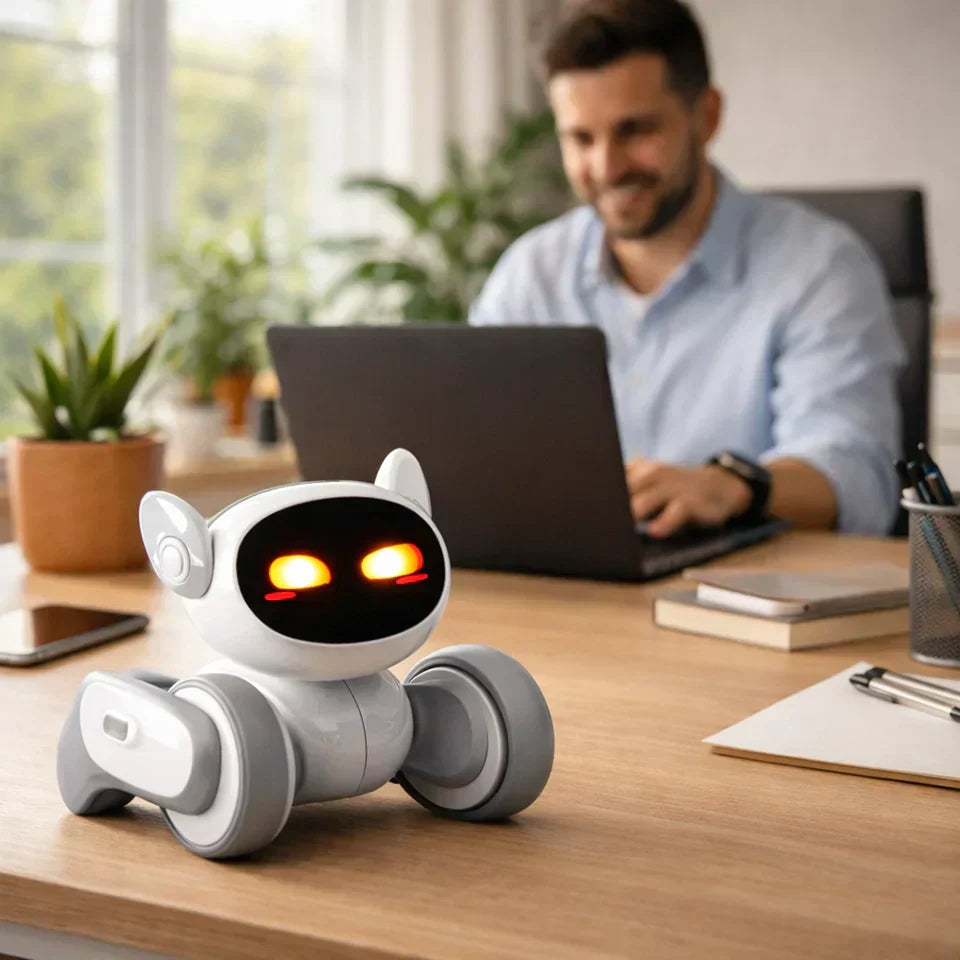
| KEYirobot ( Loona) | Service & consumer robotics | Consumer companion robotics: interactive pet robots for home |
Quick note: these aren’t ranked 1–16. “Best” depends on environment, integration, and what you’re automating.
1. Humanoids & general-purpose robots
Humanoids are the loudest part of the market right now. Some are still early, but several are moving toward factory workflows (sequencing, tote handling, light material movement).
| Company | Best fit | What to know |
| Figure | Factory pilots + general-purpose roadmap | Strong commercialization narrative; still scope tightly |
| Agility Robotics | Repetitive industrial tasks in human spaces | Digit aimed at practical, bounded workflows |
| Apptronik | Warehouse/manufacturing integration pilots | Apollo positioned around enterprise use cases |
| Sanctuary AI | General-purpose positioning | Often framed around broad task coverage |
| Tesla (Optimus) | Watch-list | High visibility; validate real deployments over demos |
| UBTech | Industrial humanoids | Enterprise traction signals in certain markets |
| Unitree | Price/volume-driven | Aggressive scaling posture; validate fit + safety |
Reality check: if you need ROI this year, most humanoid projects work best when scoped like a product pilot—one workflow, fixed aisle, controlled handoffs, clear safety rules.
2. Warehouse & fulfillment robotics (AMRs, picking, sortation)
This is where buyers tend to see the fastest payback because the environments are repeatable and the labor pain is immediate.
| Company | Best fit | What to know |
| Amazon Robotics | High-scale fulfillment | Multiple robot families supporting real workflows |
| Symbotic | End-to-end warehouse automation | Strong “system” orientation (not just one robot) |
| Locus Robotics | AMR picking fleets | Widely deployed; emphasizes adoption + throughput |
| GreyOrange | Fleet + orchestration | Often positioned as robotics + software layer |
| Geek+ | AMR deployments | Large footprint; validate local support/integration |
| RightHand Robotics | Piece-picking | Performance depends heavily on SKU mix |
| Berkshire Grey | Sortation + fulfillment | Common in parcel/logistics contexts |
| Ocado Technology | High-density fulfillment | Operationally elite; not always framed “AI-first” |
If you’re evaluating this category, pay attention to: WMS/WES integration, exception handling, network uptime, and how the vendor treats “messy” SKUs (bags, soft goods, reflective packaging).
3. Industrial cobots & machine tending
Cobots and industrial arms are where most factories start—especially for CNC tending, packaging, palletizing, simple assembly, and inspection.
| Company | Best fit | What to know |
| ABB Robotics | Industrial + cobots | Big ecosystem; strong service footprint |
| FANUC | High-reliability industrial | Installed base + durability reputation |
| KUKA | Industrial automation | Strong in automotive and beyond |
| Yaskawa Motoman | Industrial arms | Broad catalog + integration history |
| Universal Robots | Cobots | Category leader; huge peripherals ecosystem |
| Kawasaki Robotics | Industrial automation | Common in heavy-duty industrial contexts |
| Denso Robotics | Compact precision cells | Often seen in electronics/precision ops |
| Omron | Automation + mobile/vision | Integrated automation stack strengths |
Why this matters: industrial robot demand is a long game, and vendors with strong integration + safety + service networks are hard to displace.
4. Field robotics (agriculture, construction, outdoors)
Field robots live in the “unstructured world,” where perception and autonomy actually matter.
| Company | Best fit | What to know |
| John Deere | Agriculture autonomy | Strong positioning around field operations |
| Trimble | Precision + autonomy ecosystem | Often acts as platform layer across fleets |
| Built Robotics | Construction automation retrofits | Practical approach; scope matters |
| Oshkosh | Industrial/construction autonomy | High visibility; validate jobsite constraints |
| Caterpillar | Mining + heavy equipment autonomy | Deep deployments; long sales cycles |
Start with one bounded jobsite loop and instrument it heavily.
5. Inspection, security & mobility robots
This category is underrated: inspection and patrol use cases often have clear metrics (miles patrolled, anomalies detected, hours saved).
| Company | Best fit | What to know |
| Boston Dynamics | Inspection + mobile sensing | A reference point for mobility deployments |
| ANYbotics | Industrial inspection | Common in oil/gas, power, heavy industry contexts |
| Asylon Robotics | Security patrol workflows | Security-focused offerings built around patrol ops |
| Knightscope | Public-facing security robotics | Polarizing; validate environment + expectations |
6. Drones & autonomous delivery
These are robotics companies even when they don’t look like “robots” at first glance.
| Company | Best fit | What to know |
| Zipline | Delivery logistics | Strong logistics positioning; ops matters as much as tech |
| Wing (Alphabet) | Select-market delivery | Service depends heavily on local approvals + execution |
| Flytrex | Suburban delivery | Partnership-driven rollout style |
| Skydio | Autonomous inspection | More inspection than delivery; autonomy is core |
7. Service & consumer robotics (companion & pet robots)
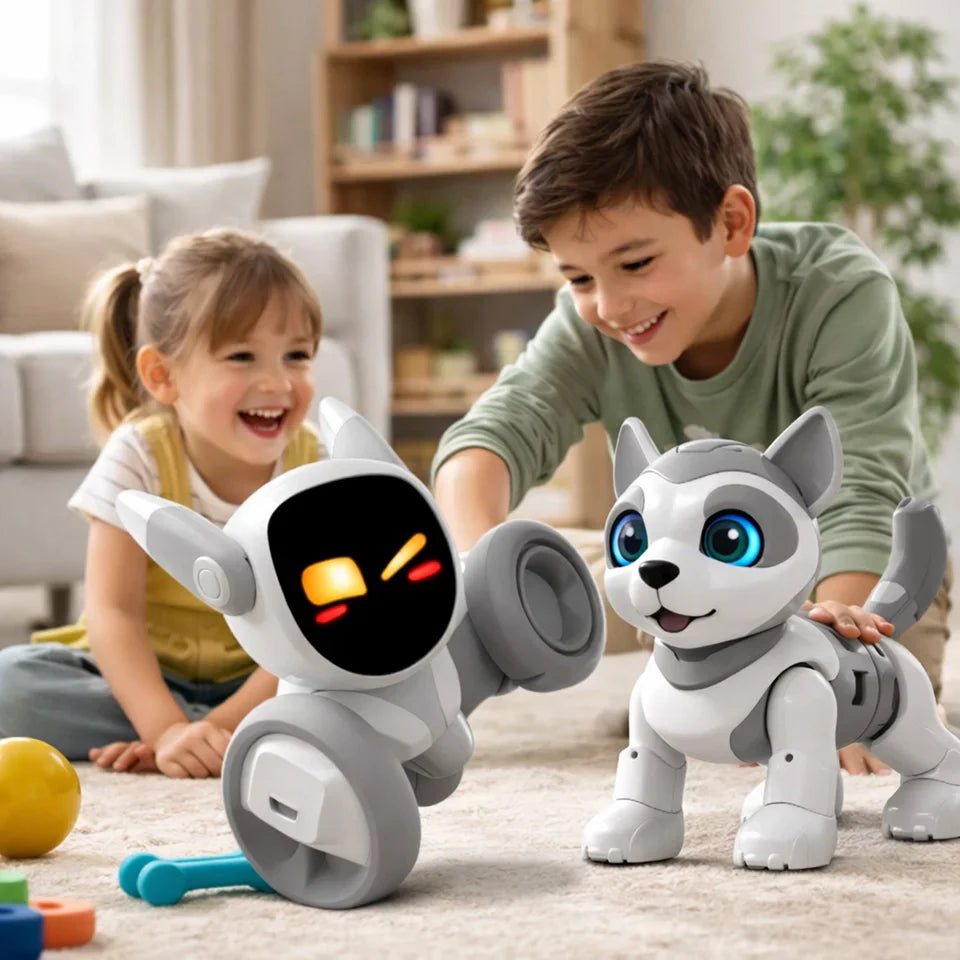
Service and consumer robots don’t live on pristine factory floors. They have to be safe, expressive, and resilient around people—in homes with carpet, clutter, changing light, and unpredictable routines. That shifts the “AI” bar from pure throughput to interaction quality: responsiveness, personality, and long-term reliability.
| Company | Best fit | What to know |
| KEYirobot (Loona) | Families & kids; home interaction | Consumer companion / pet robotics designed for everyday home use |
Reality check: this category wins or loses on the basics—setup friction, durability, battery/charging behavior, and whether the interaction still feels rewarding after the first week.
Editor’s note: if you’re new to consumer robotics, pet robots are a useful mental model for embodied AI—less about perfect repetition, more about trust, safety, and delight.
If you’re comparing consumer companion robots, start by exploring Loona.
8. Robot foundation models & enabling software
This is the layer that’s quietly reshaping the industry: models trained on robot interaction data, simulation + perception stacks, and autonomy middleware.
| Company / ecosystem | Best fit | What to know |
| Covariant | Warehouse manipulation software | “Robot brain” approach aimed at picking/manipulation |
| Google DeepMind (robotics models) | Research-to-product bridge | Watch the path from demos → deployable tooling |
| NVIDIA (robotics stack) | Compute + simulation enablement | Common partner across vendors; stack matters |
| ROS ecosystem (ROS 2) | Robotics integration default | Often the glue; not a “vendor,” but everywhere |
How to choose an AI robotics company (a buyer’s checklist)
This section is written for people who actually have to deploy something—ops leaders, automation engineers, and anyone running a vendor evaluation.
1) Start with the workcell, not the robot
Write down (in plain language):
-
The task steps (what happens before/after the robot acts)
-
Cycle time target
-
Failure modes (what goes wrong in the real world)
-
Safety envelope and human-robot interaction rules
-
Integration points (WMS/WES/ERP/PLC)
If the task isn’t defined, you’re not buying robotics—you’re buying a science project.
2) Ask for proof of deployment
Strong signals:
-
Operator references with measurable results
-
Commissioning plan and realistic timeline
-
Uptime targets + support model (SLA, spares, remote diagnostics)
-
Clear constraints
3) Integration will decide your total cost
Most pain in robotics shows up here:
-
Middleware/WES orchestration
-
Mapping and fleet management
-
Change management on the warehouse floor
-
Exception handling (the “last 10%”)
If you don’t have controls/software bandwidth, favor vendors with proven integration partners.
4) Don’t skip “day 30” questions
Ask:
-
How do updates work?
-
What happens if Wi-Fi drops?
-
How do you recover from errors?
-
How much operator training is required?
-
What’s the plan for continuous improvement?
5) Pick the right success metric
A clean metric makes decisions easy:
-
Warehouse: picks/hour, travel time reduction, throughput under peak
-
Factory: OEE impact, scrap reduction, consistent cycle time
-
Inspection: anomalies found/hour, time saved, coverage growth
-
Consumer: retention (still used after 2–4 weeks), support burden, satisfaction
If you’re buying a consumer companion robot
Before you compare specs, check the daily-life basics: safety and durability, setup time, charging routine, and whether engagement holds after the novelty phase.

Conclusion
Robotics is getting noisier—humanoids everywhere, foundation models in every press release—but buying decisions still come down to the unglamorous stuff: environment, integration, safety, and whether performance holds up after the pilot. That’s why this guide is organized by category first. Once you pick the right category (warehouse, factory, field, inspection, drones, consumer), the vendor shortlist usually becomes obvious.
And if you’re exploring consumer companion robots, focus on the daily-life basics—setup friction, durability, charging behavior, and whether engagement lasts beyond the novelty phase.
FAQs
What should I look for in an AI pet robot for kids?
Start with safety and durability, then look at setup friction, charging behavior, and whether the interaction stays engaging over time (not just on day one). If you’re specifically evaluating consumer companion robots, exploring products like Loona can help you see what “daily-life friendly” looks like.
Are consumer companion robots part of the “AI robotics companies” landscape?
Yes. Consumer robotics is a different test of embodied AI—less about throughput and more about safe, reliable interaction in unstructured home environments. KEYirobot is one example in this category with its pet robot Loona.
Which AI robotics companies are best for warehouses?
Look for vendors with proven deployments, strong WMS/WES integration, and a serious exception-handling story. AMR fleets and end-to-end automation systems are often the fastest path to measurable ROI.
What’s the difference between an industrial robot company and an AI robotics company?
Industrial robot companies become “AI robotics companies” when they ship meaningful autonomy (vision, adaptive motion, learned manipulation) and support it with a robust data/software loop that improves performance over time.