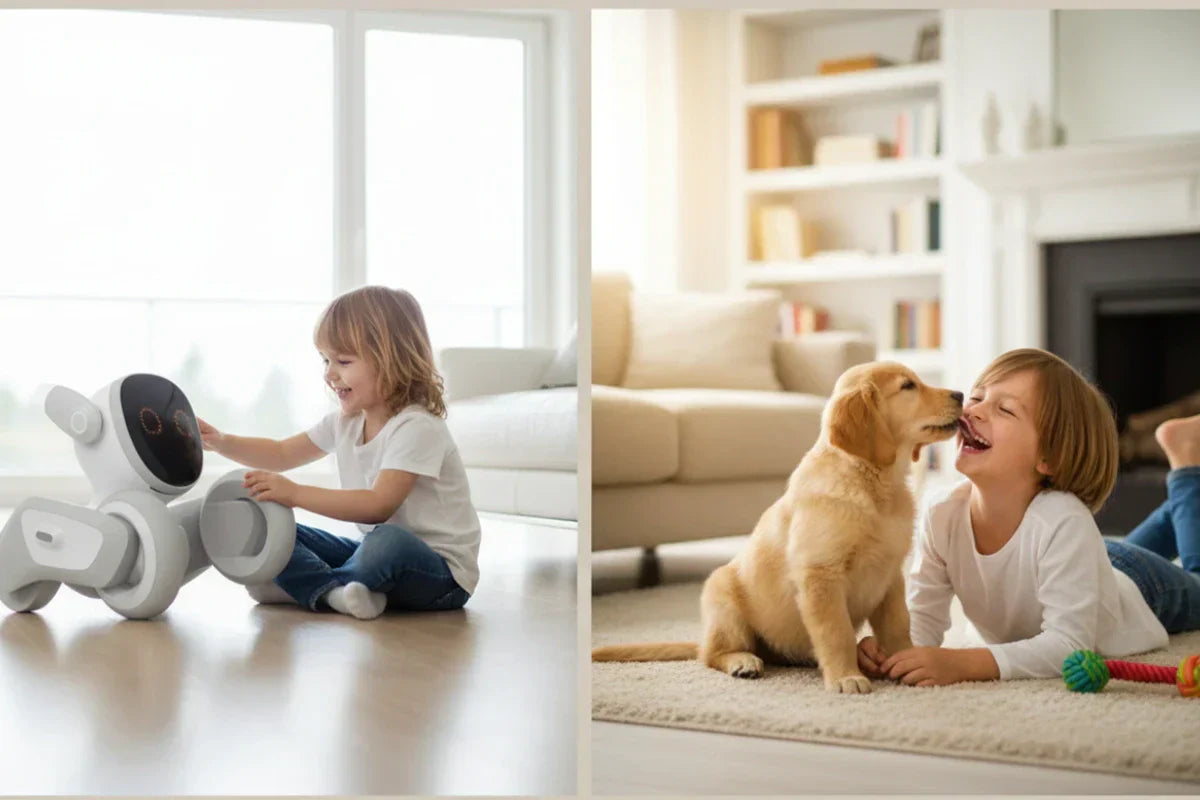






In just a few years, the idea of a “robot” has shifted from novelty to normal. Back then, it often meant a robot vacuum that bumped into furniture and needed constant rescue. In 2026, the best AI robots feel closer to perception + decision + action: they recognize objects, learn routines, navigate real-world mess, and recover from mistakes without turning you into tech support.
This guide is a consumer-first Top 10 list of AI robots in 2026—covering real-world use cases, the signature AI features that actually improve outcomes, and a clear 2026 reality check on price, upkeep, subscriptions, and privacy.
Why 2026 feels like the year “AI robots” became normal
A few years ago, “robot” usually meant “a vacuum that bonks into chairs.” In 2026, the better ones do something closer to perception + decision + action: they recognize objects, learn routines, and recover from mistakes without you playing tech support.
Two big shifts are driving this:
-
Robots got better at not being dumb in your home. Modern robot vacuums are praised specifically for obstacle avoidance, multi-floor mapping, and dock automation (self-emptying, self-cleaning, etc.).
-
“Wire-free” outdoor robots finally feel realistic for regular households. Robotic mowers are rapidly expanding with boundary wire-free options and more capable navigation stacks.
-
Robots are showing up outside the home more often—delivery, hotels, retail. Sidewalk delivery fleets and “robot-assisted” hospitality keep expanding.
What follows is a consumer-first “Top 10” list: use cases, signature AI features, and the 2026 reality check (cost, upkeep, privacy, and what to watch out for).
How this “Top 10” is chosen
This list prioritizes robots you can realistically encounter in 2026, not lab demos:
-
Real-world usefulness: it saves time, reduces risk, or meaningfully helps daily life.
-
AI that shows up in outcomes: fewer failures, better autonomy, smarter decisions—not just marketing.
-
Availability + momentum: widely sold now, scaling fast, or strongly signaled for near-term rollout via reputable announcements.
-
Consumer experience: app quality, support, replacement parts, and recurring costs (bags, filters, subscriptions).
How to judge any AI robot in 60 seconds
Before we dive into the Top 10, here’s the fast checklist:
-
Best for: Who benefits most? (pets, apartments, yards, seniors, etc.)
-
Top use cases: What does it reliably do today?
-
Signature AI features: The “smart” part that changes your day.
-
2026 reality check: Price, subscriptions, maintenance, privacy.
-
What improved lately: Better navigation, fewer errors, more autonomy.
Keep that in mind—because “AI” is easy to slap on a box.

The Top 10 Robots with AI in 2026
Think of this list as a tour of where robots are most likely to show up in your life in 2026. Some are practical workhorses you’ll notice because your home feels cleaner. Others are small companions that change the vibe of a room. And a few are the “outside your home” robots you’ll meet when you order food or walk into a hotel. Below are ten standout robot categories that best capture how AI is changing what robots can do—and who they’re actually useful for.
1. Next-gen robot vacuum / mop (the most “mature” home robot)
Best for: Busy households, pet owners, anyone who hates daily crumbs.
Top use cases
-
Scheduled vacuuming + mopping without babysitting
-
Avoiding small obstacles (toys, cables, socks)
-
Hands-off maintenance with advanced docks (emptying, washing, drying)
Signature AI features (what actually matters)
-
Smarter navigation and mapping, often combining LiDAR with vision for obstacle avoidance.
-
Better object recognition: fewer “help me, I ate a phone charger” moments.
2026 reality check
-
Premium models can still be pricey, but independent testers and mainstream reviewers regularly rank top models on navigation + smart features.
Real examples to mention in your article draft
-
Roborock Qrevo line is frequently highlighted by consumer tech outlets for strong hybrid cleaning + dock automation.
2. Wire-free robotic lawn mower (outdoor autonomy is finally consumer-friendly)
Best for: Homeowners who want weekends back (and don’t want to install boundary wire).
Top use cases
-
Autonomous mowing with fewer manual setup hassles
-
Better edge handling and variable terrain
-
Scheduled mowing that maintains a “always tidy” lawn
Signature AI features
-
Navigation stacks that rely on combinations of RTK / LiDAR / AI vision (varies by model), enabling wire-free operation.
-
Product lines expanding quickly—especially boundary wire-free models.
2026 reality check
-
Expect a setup phase (mapping, zones, no-go areas). Also: wet grass and complex yards still trip up cheaper units.
Real examples
-
Husqvarna’s large boundary wire-free expansion for 2025 shows where the market is heading in 2026.
-
CES 2026 showcased mowers emphasizing LiDAR + AI vision + wire-free setup.
3. Window-cleaning robot
Best for: Apartment dwellers, anyone with large windows, and people who value safety.
Top use cases
-
Routine window cleaning with edge detection
-
Cleaning hard-to-reach glass without risky climbs
-
Maintaining clearer windows with frequent light cleans
Signature AI features
-
Sensor-based edge detection + path planning (“don’t drive off the glass”).
2026 reality check
-
These are better as “maintenance cleaners” than miracle workers. You still need to prep the window and occasionally re-pad.
Real examples
-
Consumer guides often highlight models like Hobot / Ecovacs Winbot families and talk up navigation + safety features.
4. Home security patrol robot (niche, but getting attention)
Best for: Large homes, people who want mobile monitoring (and understand privacy tradeoffs).
Top use cases
-
Mobile check-ins (garage, back door, downstairs)
-
Smarter alerts (movement patterns, unusual sounds)
-
Acting as a deterrent (sometimes just being seen helps)
Signature AI features
-
“Anomaly detection” style alerts—flagging what looks unusual rather than everything. (Execution varies widely.)
2026 reality check
-
This category has fewer mature options than robot vacuums, and it can raise big privacy questions.
Real examples
-
Security-focused consumer sites note the category is still limited compared with traditional home security systems.
5. Companion / social robot (from novelty to “actually helpful” for some people)
Best for: Older adults, people living alone, families wanting light assistance + check-ins.
Top use cases
-
Reminders, routines, “gentle nudges”
-
Conversation and engagement
-
Light monitoring features (varies by product; sometimes includes fall-related features)
Signature AI features
-
Generative AI for more natural dialogue and longer context, especially in products positioned as companions.
2026 reality check
-
The best ones feel supportive; the worst ones feel like a chat bubble with a face. Choose based on real-world support programs, updates, and privacy.
Real examples
Loona (AI Companion Robot / Pet-Style Companion) — Best for families and anyone who wants a playful companion robot. Loona is marketed as an interactive “pet robot” with voice control, games, and AI-driven interactions designed for everyday home use.
6. Pet care robot (moving from “automation” to “health signals”)
Best for: Pet parents who travel, work long hours, or worry about hydration/feeding consistency.
Top use cases
-
Automated feeding and watering
-
Monitoring patterns (drinking, eating, litter box habits)
-
Reducing daily “pet chores” without sacrificing consistency
Signature AI features
-
“AI ecosystem” framing: turning routine data into potential health signals (trend is growing).
2026 reality check
-
Data isn’t a diagnosis. It’s a signal. Still: for many pet parents, early “something changed” alerts are valuable.
Real examples
-
PETKIT positioned CES 2026 announcements around smart fountains/feeders and an AI ecosystem aimed at health insights.
7. Kitchen / cooking robot (more real in restaurants than in most homes—for now)
Best for: Busy households who hate meal planning, and anyone curious about “automation you can taste.”
Top use cases
-
Semi-autonomous cooking workflows
-
Consistency (same result each time)
-
Reducing time spent standing at the stove
Signature AI features
-
Recipe execution systems + guided cooking flows; some products position “private chef” experiences with a library of recipes.
2026 reality check
-
Home cooking robots are emerging, but the most proven deployments are still commercial kitchen automation (where repeatability matters more than artistry).
Real examples
-
Posha markets itself as an autonomous kitchen robot with a large recipe library (subscription caveats apply).
-
Robotic wok systems show how restaurant automation is expanding.
8. Smart rehab / wellness robot (AI-enabled recovery support is accelerating)
Best for: People doing guided rehab, mobility work, or therapy exercises—especially with clinician support.
Top use cases
-
Motion guidance and feedback
-
More personalized rehab plans
-
Improved adherence (the hardest part of rehab is doing it consistently)
Signature AI features
-
AI applied to assessment + personalization in rehabilitation, including robotic rehabilitation systems in the broader landscape.
2026 reality check
-
This is the highest-stakes category in this list. Look for clinical validation, data privacy clarity, and professional involvement.
9. Retail / service helper robot (you’ll meet these before you buy them)
Best for: Consumers who want quicker assistance in stores/hotels; businesses seeking consistency.
Top use cases
-
Directions, FAQs, queue management
-
Basic guest services and delivery within venues
-
“Always-on” availability during staffing gaps
Signature AI features
-
Service contexts matter: research consistently suggests acceptance depends heavily on fit with the environment and service expectations.
2026 reality check
-
Some service robots are beloved; others feel like a kiosk on wheels. The difference is usually reliability and when a human steps in.
Real examples
-
Reports of robot-heavy hotel deployments illustrate the direction of the category (even if some coverage is more PR-like than consumer-tested).
10. Delivery / transport robot (the “sidewalk robot” era keeps scaling)
Best for: Campuses, dense neighborhoods, and anyone who likes convenience.
Top use cases
-
Short-distance food or grocery delivery
-
Reduced car trips for small orders
-
Logistics support in controlled areas (campuses, business districts)
Signature AI features
-
Autonomy designed for sidewalks: obstacle handling, route planning, and remote oversight when needed.
2026 reality check
-
Real-world issues exist: vandalism, navigation edge cases, and the need for monitoring.
Real examples
-
Starship highlights widespread university deployments in the U.S.
-
Serve Robotics has scaled a large sidewalk delivery fleet and publicized expansion milestones.
-
DoorDash expanded sidewalk robot delivery partnerships in the U.S., illustrating mainstream platform interest.
The use cases that matter most in 2026 (by lifestyle)
If you’re buying with your heart, everything looks cool. If you’re buying with your calendar, these are the wins:
-
Time-savers: vacuum/mop robots and robotic mowers give the biggest “hours back” return.
-
Safety upgrades: window-cleaning robots can reduce ladder time; delivery robots reduce quick car trips (in some areas).
-
Care + connection: companion robots and pet care ecosystems are growing for reminders, engagement, and early “pattern change” signals.
Conclusion
“AI robots” feel normal for one simple reason: the best ones finally behave like dependable products, not fragile gadgets. The AI that matters shows up in everyday outcomes—cleaning that happens without supervision, navigation that avoids clutter instead of swallowing it, and systems that can recover from mistakes without demanding your attention.