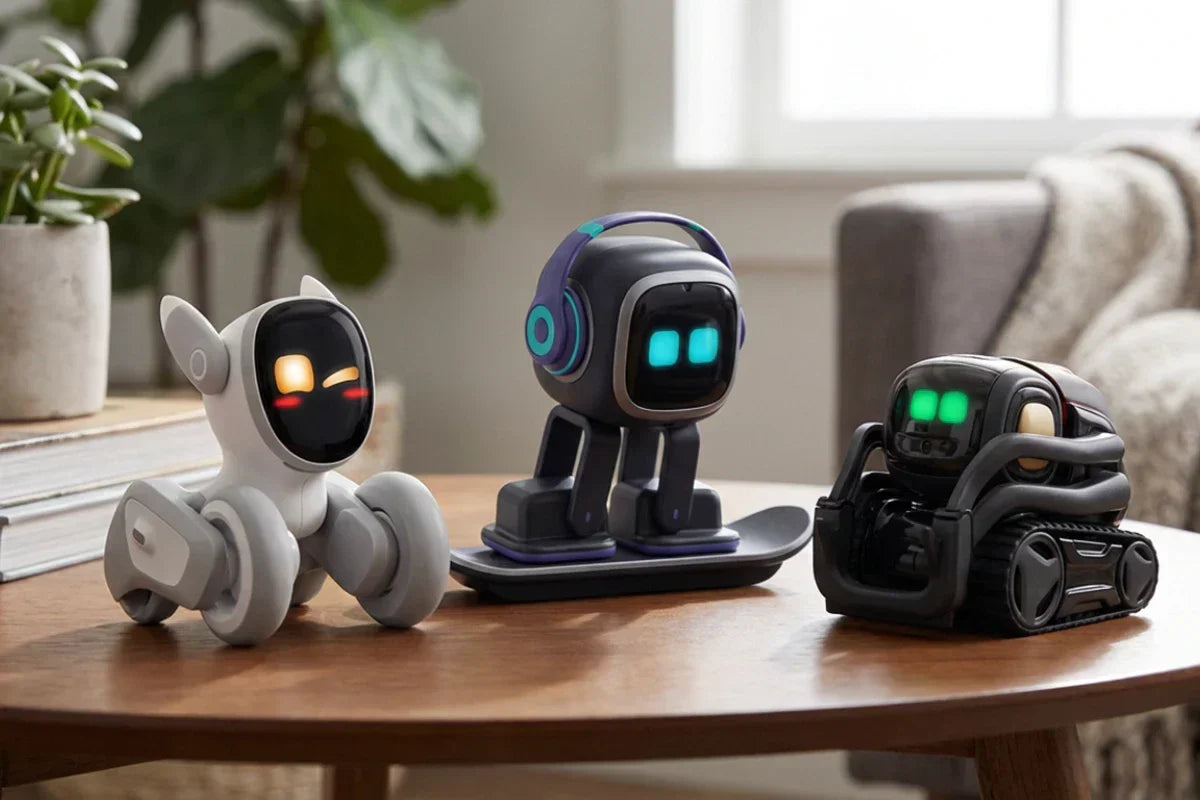






If you love the idea of a dog napping at your feet or a cat purring on your lap—but your sinuses, skin, or asthma absolutely do not—there’s a new middle ground that’s getting genuinely good in 2026: pet robots built for companionship, not chores.
This guide is for people who want the cozy, calming rituals of pet life without the biological allergens that typically come with it.
Why allergies make pet ownership hard
Most “pet allergies” aren’t really about fur itself. The usual culprits are proteins from dander/skin flakes, saliva, and urine, and those proteins hitch rides on fur, furniture, carpet, clothing—basically your whole life.
That’s why someone can say, “I’m allergic to cats,” even if they didn’t touch a cat today. The allergen can stick around indoors and travel on fabric.
The “hypoallergenic pet” myth
Here’s the part most people learn the hard way: there’s no consistently “hypoallergenic” dog breed that reliably produces fewer allergens. The American Academy of Allergy, Asthma & Immunology (AAAAI) specifically notes research hasn’t found consistent evidence that so-called hypoallergenic breeds produce lower allergen levels.
So when someone searches for “hypoallergenic pet alternative,” what they often want is simpler:
something that feels like a pet, but doesn’t produce pet allergens.
That’s where pet robots come in.
What makes a pet robot “hypoallergenic”
Robot pets don’t produce the same allergens as living animals, but “allergy-friendly” isn’t automatic. To choose well, we need to look at what robot pets eliminate—and the non-obvious things (like dust and materials) that can still bother sensitive households.
The big win: no biological allergens
A robot pet doesn’t produce dander, saliva, or urine proteins—so it sidesteps the most common allergy triggers described by allergy organizations.
Definition:
A pet robot is an allergy-friendly companion because it doesn’t generate pet dander or saliva proteins, which are common triggers for pet allergies and asthma.
The realistic “allergy gotchas”
Robot pets can still bother sensitive people—but usually for different reasons:
-
Dust collecting in faux fur, seams, vents, and joints
-
Materials (some people react to certain plastics, fabrics, dyes)
-
Cleaning products (fragrances, sprays, harsh disinfectants)
This isn’t to scare you off—just to help you pick and maintain the right model.

Best allergy-friendly pet robots in 2026 (pick by persona)
Not every robot pet is built for the same kind of companionship. Pick the model that matches your lifestyle—family play, senior comfort, apartment calm, or premium realism.
Here are the easiest “choose-your-path” recommendations:
-
Best interactive “robot pet” for families (wipeable body + rich behaviors): Loona — playful, voice interaction, games, and smart AI behaviors; includes a 720p camera and a 4-microphone array (privacy note below).
-
Best premium lifelike robot dog experience: Sony aibo (ERS-1000) — learns and evolves; cloud plan is central to the full experience.
-
Best comfort companion for seniors: Joy for All Companion Pets — designed for ease-of-care companionship and widely used in senior contexts.
-
Most realistic “therapy-style puppy” to watch: Tombot Jennie — touch sensors and voice commands; designed for people facing health adversities.
-
Best small cuddly desk companion: Casio Moflin — emotional-AI style bonding, portable, with ~5 hours battery (typical use guidance).
Comparison table (fast way to narrow your shortlist)
If you’re deciding between a few finalists, specs and “vibes” aren’t enough—especially when allergies are part of the equation. This table highlights the practical differences that matter most: cleaning effort, dust risk, and the kind of companionship you’ll actually get day to day.
| Robot pet | “Pet feel” | Allergy-friendly practical notes | Best for | Watch-outs |
| Loona | Expressive, playful “pet energy” with games | Mostly hard surfaces = easier wipe-downs vs plush; specs list 720p camera + 4-mic array | Families, kids, interactive companionship | Privacy: camera/mics; dust in joints like any device |
| Sony aibo (ERS-1000) | Premium roaming robot dog | Wipeable body; more joints/crevices | Tech lovers, “I want a dog vibe” | Cloud plan is core |
| Joy for All | Plush lap companion | Faux fur can collect dust → needs gentle cleaning | Seniors, comfort-first homes | Not “smart” like roaming robots |
| Tombot Jennie | Realistic puppy behavior | Plush/realism likely means more dust management | Therapy-style comfort | Availability timing varies |
| Casio Moflin | Small cuddly creature | Plush exterior; battery ~5 hours (typical use guidance) | Apartments, desks, calm routines | Plush dust upkeep; recharge routine |
In-depth picks (2026)
Here’s what each robot pet feels like day to day, how much cleaning it really takes, and the kind of person who’ll love it (or get bored of it fast)
Loona — best for “I want real interaction, but I can’t do dander”
Loona is built for the part of pet ownership many people actually crave: play, attention, little surprises, and companionship—without shedding, litter, or the daily pet-care workload.
What it feels like
Loona’s product positioning leans strongly into “family companion”: lively personality, smart AI interactions, and lots of games/activities.
Allergy-friendly score: strong for most allergy households
The practical advantage is simple: Loona is primarily a wipeable device rather than a faux-fur plush—so you can keep it cleaner with basic dust control. (Dust still accumulates in joints; think “phone/keyboard cleaning,” not “laundry.”)
Standout features (why it earns a spot in this guide)
-
Key specs include a 720p RGB camera and a 4-microphone array.
-
Marketed as “all the happiness of having a pet—without all the mess.”
-
Auto-recharging behavior is part of the Loona experience (returns to dock when battery is low).
Downsides
If you’re privacy-sensitive, you should treat it like a smart device: camera + microphones are part of the product’s capabilities.
-
If your main allergy trigger is dust, you still need a light routine.
Who should buy / skip
Buy if you want an interactive, playful companion and prefer something easier to wipe down than plush. Skip if you want a purely cuddly “lap pet” experience (Joy for All or Moflin may fit better).
Allergy-friendly care tip
A quick weekly wipe + a soft brush for seams/joints keeps Loona “clean-feeling” in the same way you’d maintain a controller or smart speaker.
Sony aibo (ERS-1000) — best premium “robot dog” experience
aibo is for people who want the closest mainstream thing to a “dog in the house,” including movement and personality growth over time.
Allergy-friendly score: strong
Primarily wipeable surfaces. The main maintenance is dust in seams and around moving parts.
A practical note on ongoing costs
Sony describes the aibo AI Cloud Plan as essential to the full experience (naming, growth, communication via app).
Joy for All Companion Pets — best comfort-first option for seniors
Joy for All is widely positioned as a comfort companion for older adults, including those with dementia/Alzheimer’s.
Wired also reported on their use with seniors and cited pricing around $130 (varies by retailer and time).
Allergy-friendly score: good (with plush upkeep)
Because it’s furry/plush, it can collect dust—so it’s allergy-friendly in the “no dander/saliva” sense, but still needs gentle cleaning.
Tombot Jennie — best for “realistic puppy comfort” (watch closely)
Tombot emphasizes touch sensors and voice activation, positioning the puppy as a supportive companion for people facing health adversities.
If realism is your top priority, this is one to follow.
Casio Moflin — best small cuddly companion for apartments and desks
Casio frames Moflin as a portable AI companion for people who love animals but can’t keep pets.
Casio’s FAQ guidance lists about 5 hours battery life under typical daily-use conditions.
Plush means dust upkeep—but it’s a uniquely calming “little creature” experience.
How to keep a robot pet allergy-friendly (simple routines)
Even the best robot pet won’t feel “allergy-friendly” if it quietly becomes a dust collector. The good news is that upkeep is usually simple—if you match the routine to the robot’s surface type: wipeable shells vs plush/faux fur.
If it’s wipeable (Loona, aibo)
-
Weekly microfiber wipe
-
Soft brush/cotton swab for seams and joints
-
Quick vacuum in its main play area (dust follows movement)
If it’s plush (Joy for All, Moflin, likely Tombot/LilMilo)
-
Lint roll first
-
Gentle vacuum with soft brush attachment
-
Store off the floor when not in use
Conclusion
Ultimately, the “best” allergy-friendly companion is the one you’ll actually use: the one that fits your routine, your space, and your comfort level with tech. Pick your style of companionship first (cuddly vs interactive vs roaming), choose the easiest-to-maintain design you can, and you’ll get the best part of pet life—connection—without the allergy tradeoff.
FAQ
Are robot pets truly hypoallergenic?
They don’t produce pet dander/saliva/urine proteins—common triggers—so they’re often allergy-friendly. But dust/material sensitivities can still matter.
Is Loona a good choice for allergy households?
Often yes—because it’s a robot companion with published specs and mostly wipeable surfaces, making routine cleaning easier than faux-fur models. Specs list a 720p camera and 4-mic array.
Do robot pets require subscriptions?
Some ecosystems do. For aibo, Sony positions the AI Cloud Plan as essential to the whole experience.