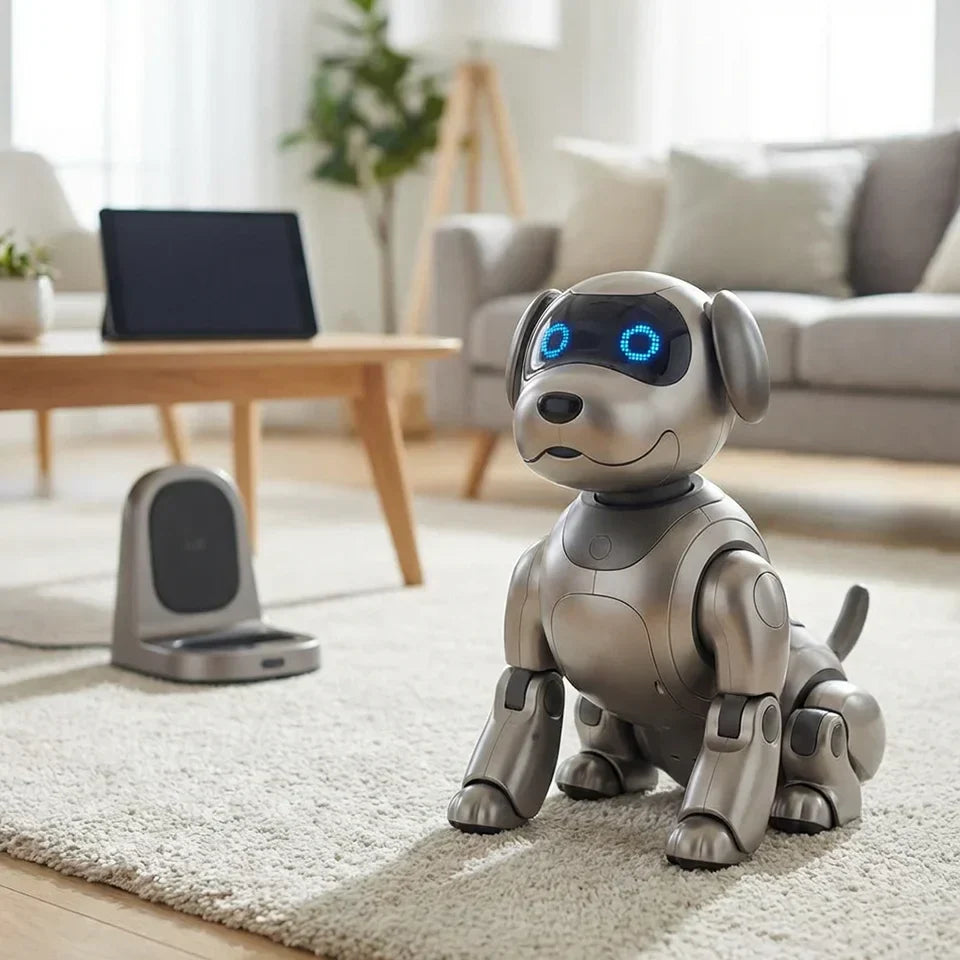






Picking the best robot dog for kids sounds easy at first—until you start comparing models.
Some are cute but limited. Some are packed with features but too complicated for younger children. Others look impressive in ads but lose their appeal after a few days of play. That is why choosing the right robot dog is less about buying the flashiest toy and more about finding the one that matches your child’s age, interests, and play style.
For some kids, a robot dog is all about companionship. For others, it is about tricks, movement, and silly interactive fun. And for families who want something more educational, the right robot dog can also introduce basic STEM thinking, sequencing, and problem-solving.
In this guide, we will walk through what really matters when choosing a robot dog for kids, which features are worth paying for, what mistakes parents often make, and how to find the right option based on age, budget, and learning goals.
Quick Answer: What Is the Best Robot Dog for Kids?
The best robot dog for kids is one that fits your child’s age, is easy to use, feels interactive enough to stay fun, and offers good value for the price.
That means there is no single “best” robot dog for every child. A preschooler usually does better with a simple, durable model that responds to touch, sound, or basic commands. An older child may get more from a robot dog with programmable features, app control, or STEM-style activities. And if you are shopping for a gift, ease of setup and replay value matter just as much as looks.
As a general rule:
- The best robot dog for preschoolers is simple, cute, durable, and easy to control.
- The best robot dog for STEM learning includes programmable features or logic-based play.
- The best robot dog for interactive fun reacts well, moves smoothly, and keeps kids engaged beyond the first day.
- The best budget robot dog offers a few strong features without feeling flimsy or frustrating.
- The best premium robot dog delivers better responsiveness, stronger build quality, and longer-lasting play value.
If you are not sure where to begin, start with your child’s age and how they like to play. That narrows the field much faster than focusing on marketing claims.
What to Look for in the Best Robot Dog for Kids
Not every feature on the box matters equally. Some things genuinely improve playtime, while others sound exciting but rarely get used. Here are the factors that deserve the most attention.
Age Appropriateness
This is the first filter, and honestly, it matters more than most parents expect.
A robot dog that feels exciting for an eight-year-old may feel frustrating or confusing for a four-year-old. Younger children usually need bigger buttons, simpler controls, predictable reactions, and fewer setup steps. Older kids are more likely to enjoy challenge-based play, programmable routines, or app-connected features.
For ages 3 to 5, look for models with:
- simple controls
- soft or rounded edges
- clear reactions to touch, sound, or movement
- sturdy construction
- limited dependence on apps or instructions
For ages 5 to 7, a child can usually handle:
- remote control functions
- tricks and movement modes
- simple voice commands
- more varied play patterns
For ages 8 to 12, it often makes sense to consider:
- programmable commands
- app control
- STEM-friendly features
- more detailed customization
If your child is between age ranges, go with their patience level and confidence, not just the number on the box.
Safety and Durability
A good robot dog for kids should feel safe in everyday play. That means more than just meeting toy safety basics.
Look for a design that feels stable when moving, has no sharp corners, and can handle the occasional drop from a couch or table. If the toy uses batteries, the battery compartment should feel secure. If it is rechargeable, charging should be straightforward and not require constant adult troubleshooting.
Durability matters because kids do not play gently all the time. A robot dog that breaks after a few rough play sessions is not really a bargain, even if the price looked attractive upfront.
Ease of Use
Parents often underestimate this one. A toy can have amazing features, but if it takes too long to pair, charge, or explain, kids may lose interest before the fun begins.
The best robot dog for kids should feel rewarding right away. The first interaction should be simple enough that a child can quickly understand, “When I do this, the robot dog responds like that.”
Ask yourself:
- Can my child use it without constant help?
- Is setup simple?
- Are the controls intuitive?
- Will charging or batteries become a hassle?
In real life, the toys kids return to again and again are usually the ones that feel effortless to start using.
Interactivity
This is where a robot dog either becomes a favorite or ends up forgotten in a corner.
Good interactivity creates the feeling that the toy is responsive rather than repetitive. Touch sensors, voice response, hand gestures, follow mode, barking sounds, dancing, and pet-like reactions can all add to that experience—as long as they work well.
The key is not the number of features. It is how satisfying those features feel in practice.
A robot dog that reacts consistently, moves smoothly, and behaves in ways that feel playful or surprising will usually hold attention longer than one with a long list of weak gimmicks.
Educational Value
Not every family cares about this equally, but if you do, it is worth looking closely at what “educational” actually means.
In some products, educational value simply means cause-and-effect play: press a button, see a reaction, repeat. That is still useful for younger children. In other cases, a robot dog may introduce more advanced concepts like sequencing, command logic, coding basics, or task-based problem-solving.
If your goal is STEM learning, look for features that encourage kids to:
- build sequences
- solve simple challenges
- experiment with commands
- predict outcomes
- learn through trial and error
If a product claims to be educational but offers little beyond lights and sound effects, it may not deliver much learning value after the novelty wears off.
Battery Life and Charging
This may not be the most exciting factor, but it affects the day-to-day experience more than people think.
A robot dog that needs constant charging can interrupt play and create frustration, especially for younger kids who do not understand why their toy suddenly stops working. On the other hand, a model with reasonable battery life and simple charging feels much easier to live with.
Rechargeable models can be more convenient over time, but only if charging is fast and reliable. Battery-powered options may work better for families who want quick replacement and minimal downtime.
Either way, it helps to think practically: how long will your child actually be able to enjoy it before it needs attention again?
Features Worth Paying for vs. Gimmicks
This is where smart buying makes a difference.
Features worth paying for usually include:
- strong responsiveness
- smooth movement
- reliable sensors
- durable build quality
- easy controls
- meaningful programmable play
- decent battery performance
Features that are often more gimmick than value include:
- too many novelty modes that all feel similar
- weak app features that parents never want to troubleshoot
- sound effects that become annoying quickly
- overcomplicated controls for younger kids
A good rule of thumb: if a feature makes the toy easier to enjoy, easier to replay, or more engaging over time, it is probably valuable. If it only sounds impressive in a product listing, it may not matter much once the box is open.
How to Choose the Right Robot Dog by Age, Play Style, and Budget
Once you know what matters most, the next step is narrowing down the right type of robot dog for your child.
By Age
For kids ages 3 to 5, simplicity wins. At this stage, children usually want immediate interaction, friendly reactions, and controls they can understand without instructions. The best robot dog for this age group is usually more about pretend pet play than advanced features.
For kids ages 5 to 7, you can start looking at more movement, trick modes, and basic command-based play. Children in this range often enjoy the feeling of “training” the robot dog or making it perform.
For kids ages 8 to 12, it makes more sense to prioritize replay value. That may mean app connectivity, programmable behaviors, task-based play, or STEM-style interaction. Older kids are more likely to stick with a robot dog if it offers something to figure out, customize, or control.
By Play Style
Some kids want a robot dog that feels like a little companion. They like pet-like reactions, sounds, touch response, and pretend care. In that case, look for personality and responsiveness over technical complexity.
Some kids want a toy that performs. They care more about tricks, dancing, movement, and commands. For them, entertainment value matters most.
Others are naturally curious about how things work. These are the kids who may benefit most from a STEM-friendly robot dog with programming or sequencing features.
And then there is the family factor. If siblings are likely to play together, a robot dog with broader interactive modes may hold up better than a toy designed mainly for solo use.
By Budget
Under $50, you can usually expect basic interaction, simple movement, and novelty-driven play. These models can still be fun, especially for younger kids, but expectations should stay realistic. You are usually paying for a lighter experience rather than deep functionality.
Between $50 and $150 is often the best value range for most families. This is where you are more likely to find a good balance of quality, interactivity, durability, and age-appropriate features.
Above $150, you should expect something more than just a cute toy. Better responsiveness, smoother performance, stronger educational features, or a more advanced interactive experience should justify the higher price.
A higher price is not automatically better. The real question is whether your child will actually use the added features.

Common Mistakes Parents Make When Buying a Robot Dog
Even thoughtful buyers can end up with the wrong fit. Here are a few common mistakes worth avoiding.
Choosing Based on Looks Alone
A robot dog that looks adorable in photos is not always the one kids enjoy most. Design matters, but function matters more. Responsiveness, ease of use, and durability usually have a bigger impact on long-term satisfaction than appearance.
Ignoring the Recommended Age Range
This is one of the fastest ways to turn a fun gift into a frustrating one. A toy that is too advanced can feel overwhelming. A toy that is too simple can get boring quickly. The right age fit helps protect both excitement and replay value.
Buying a Model That Is Too Complicated
Parents sometimes assume more features always mean better value. In reality, too many layers can make a toy less enjoyable, especially for younger kids. The best choice is often the one that matches the child’s ability to explore independently.
Overlooking Battery Life
Short play sessions and frequent charging interruptions can become annoying fast. A robot dog might seem exciting at first, but poor battery performance can reduce how often it actually gets used.
Assuming Every Robot Dog Is Educational
“Educational” is one of those labels that gets used loosely. Some robot dogs genuinely support STEM-style learning or logical play. Others simply include buttons, sounds, and movement with very little real skill-building. It helps to read beyond the marketing language.
Paying Extra for Features Kids Will Barely Use
This happens a lot with premium toys. Parents pay more for advanced features that sound impressive, but the child mainly uses the same two or three functions every time. If your child is young or just wants a fun interactive pet, you may not need the most advanced model.
Best Robot Dogs for Different Kids: Top Picks Compared
When comparing options, it helps to think in categories instead of chasing one universal winner.
Best for Preschoolers
Look for a robot dog that is durable, friendly, easy to activate, and not overloaded with controls. Preschoolers usually enjoy direct feedback—touch the head, hear a bark, watch it move—more than complicated feature sets.
Best for STEM Learning
For kids who enjoy building, coding, or figuring things out, prioritize robot dogs with command logic, programmable actions, or challenge-based interaction. The best STEM-friendly models feel like both a toy and a learning tool.
Best for Interactive Play
If your child mostly wants fun, personality matters. A robot dog that reacts well, performs tricks, follows commands, or behaves in playful ways is often the best fit for this category.
Best Budget Robot Dog
The best budget choice is not necessarily the cheapest. It is the one that gives enough interaction to feel exciting, while still being reliable and easy to use. For many families, a simpler but well-executed robot dog is a smarter purchase than a feature-heavy low-cost model.
Best Premium Robot Dog
A premium robot dog should deliver noticeably better performance, not just a higher price tag. That may include better sensors, stronger movement, more advanced interaction, or more meaningful educational features.
Best Gift Option
If you are buying for a birthday or holiday, think about the unboxing experience too. A good gift option should feel exciting right away, be simple enough to start quickly, and have enough replay value to stay interesting after the first day.
When reviewing products, it helps to compare them using the same criteria every time:
- best for
- recommended age
- main features
- why kids like it
- why parents like it
- what to consider before buying
That makes it much easier to choose based on fit rather than hype.
Conclusion
If you are trying to choose the best robot dog for kids, the smartest approach is to keep it simple.
Start with age. Then think about how your child likes to play. Do they want a companion, a performer, or something they can learn from? After that, match your budget to the level of interactivity and quality you actually need.
For younger kids, choose simplicity, durability, and friendly interaction.
For kids who love pet-style play, choose responsiveness and personality.
For kids interested in technology, coding, or building, choose a robot dog with more meaningful STEM or programmable features.
FAQs
Are robot dogs good for kids?
Yes, robot dogs can be a great toy for kids when chosen carefully. They can support imaginative play, interactive fun, and in some cases early STEM learning.
What age is best for a robot dog?
That depends on the model. Simpler robot dogs can work well for younger children, while more advanced options are often better for older kids who can appreciate deeper interaction or tech-based features.
Are robot dogs safe for younger children?
Many are designed for children, but parents should still check recommended ages, build quality, material safety, and battery compartment security before buying.