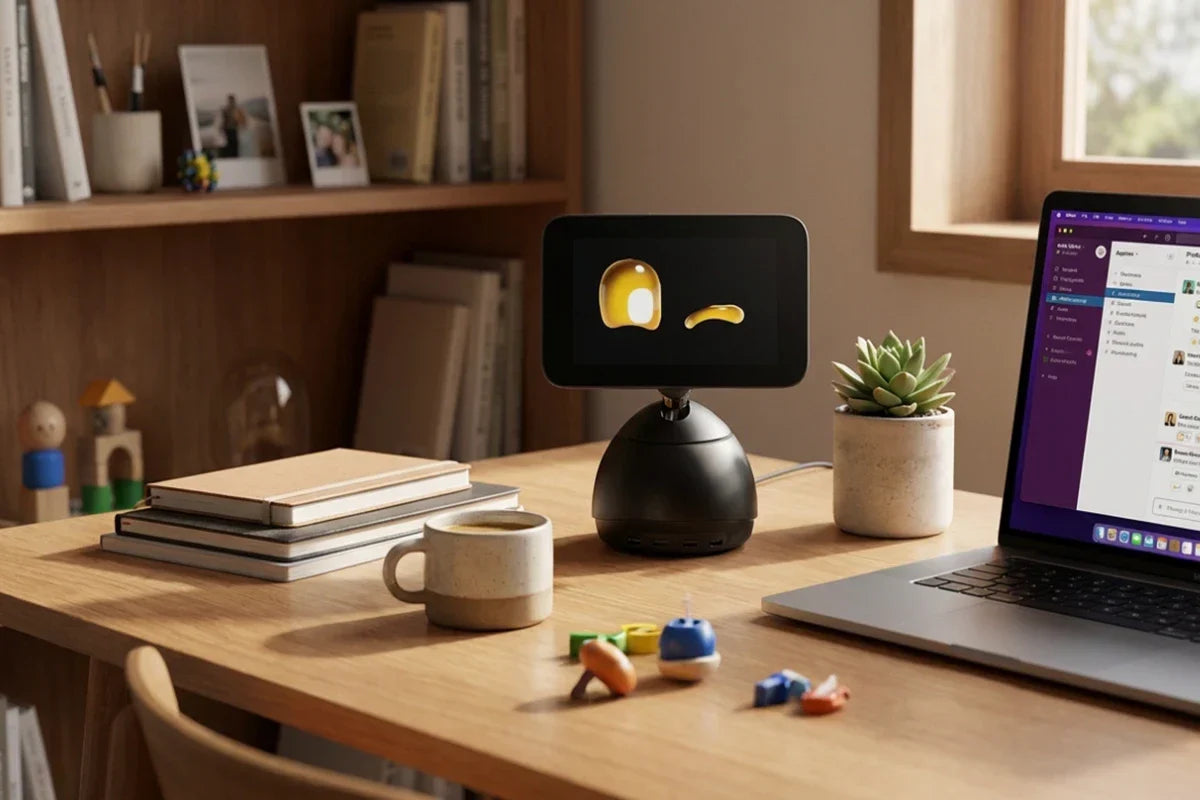






Technology used to be about speed, convenience, and automation. Now, for a growing number of people, it is also becoming about something more personal: companionship.
That shift helps explain why interest in the AI robot friend has grown so quickly. People are no longer just asking what AI can do. They are asking what AI can feel like to live with. Can a robot make everyday life feel less lonely? Can it offer comfort after a stressful day? Can it become a familiar presence in the home, not just another smart device?
Those questions are exactly why AI robot friends are getting so much attention.
Some people want a playful, interactive companion at home. Others are curious about whether a physical AI companion feels more engaging than a chatbot on a screen. And many simply want to understand where these robots genuinely help, where they fall short, and how to choose one that fits real life.
In this guide, we will break down what an AI robot friend really is, how it can provide emotional support, the benefits and limitations to understand, and what to look for if you are considering one for yourself or your family.
What Is an AI Robot Friend?
An AI robot friend is a physical or digital companion designed to interact with people in a more personal, responsive, and engaging way than a standard device. Unlike a basic voice assistant that mainly answers commands, an AI robot friend is built around ongoing interaction. It is meant to feel less like a tool and more like a presence.
In simple terms, it sits somewhere between a smart device, a conversational AI, and a companion.
That distinction matters. A chatbot usually lives in an app or browser window. A voice assistant is often task-focused, helping with alarms, weather, music, or reminders. An AI robot friend, by contrast, is designed to create a stronger sense of connection through conversation, movement, personality, and repeated interaction over time.
There are also two main formats:
AI robot friend vs chatbot vs voice assistant
A chatbot gives text-based responses. A voice assistant responds to commands. An AI robot friend aims to do more than either of those by making interaction feel ongoing, expressive, and emotionally engaging.
The difference is not just technical. It is experiential.
A chatbot can answer a question. A robot companion can greet you when you walk by, react to your voice, show playful behaviors, and build familiar routines into everyday life.
Physical robot vs virtual AI companion
A virtual AI companion lives on a phone, tablet, or computer. A physical AI robot friend exists in your space. That physical presence can make a big difference. People often respond more strongly to movement, eye contact simulation, sound cues, and visible personality than they do to text alone.
That is one reason many buyers are specifically interested in a robot rather than an app-only companion.
What “smart emotional support” really means
“Smart emotional support” does not mean a robot truly feels emotions the way a human does. It means the robot is designed to recognize patterns, respond in emotionally appropriate ways, and create interactions that feel comforting, engaging, or reassuring.
In other words, the support comes from the experience it creates: familiarity, responsiveness, routine, playfulness, and presence.

How Does an AI Robot Friend Provide Emotional Support?
An AI robot friend does not provide emotional support the way a close friend, family member, or therapist does. What it can do is offer a kind of steady, low-pressure companionship that many people find calming and enjoyable.
That support usually comes from four things: availability, personalization, interaction style, and physical presence.
24/7 companionship and conversation
One of the biggest appeals of an AI robot friend is that it is always available. There is no need to wait for a response, feel awkward about reaching out, or worry about being judged. For some people, that alone makes interaction feel easier and more relaxing.
Even short exchanges can matter. A quick greeting in the morning, a playful reaction during the day, or a familiar interaction in the evening can make a home feel less empty and a routine feel more grounded.
Personalized interaction through memory and learning
The more a robot remembers preferences, habits, and recurring patterns, the more natural it can feel to interact with. Personalization helps turn repeated use into something closer to a relationship rhythm.
That might mean the robot responds differently based on the user’s habits, recognizes favorite activities, or develops a style of interaction that feels more familiar over time.
This is where many AI companions start to feel less generic. Familiarity builds comfort.
Mood-aware responses and engagement
Some AI systems are designed to detect cues such as tone of voice, timing, or behavior patterns and respond in a way that feels supportive. That does not mean they understand emotion in a human sense. It means they are built to recognize signals and react in a way people often interpret as attentive or empathetic.
Sometimes that support is conversational. Sometimes it is playful. Sometimes it is simply a matter of being responsive when a person wants interaction.
The role of voice, movement, and physical presence
A physical robot can do something an app cannot: share space with you.
That physical presence matters more than many people expect. Movement, expressive reactions, sound, and visible attention all help create a stronger sense of companionship. A robot that turns toward you, reacts to your actions, and behaves with a recognizable personality can feel much more engaging than a voice coming from a speaker.
That does not make it human. But it can make it feel more alive in the room, and that often changes how people respond to it emotionally.
Benefits of AI Robot Friends and Who They’re Best For
The value of an AI robot friend is not the same for everyone. For some people, it is mostly about fun and interaction. For others, it is about routine, comfort, or making a home feel more lively.
The best way to understand the benefits is to look at what these companions actually add to daily life.
Reducing loneliness and isolation
An AI robot friend cannot replace human relationships, but it can make quiet spaces feel less empty. That matters more than it might sound.
For someone living alone, working remotely, or spending long stretches of time without much social interaction, even small moments of engagement can make a day feel more connected. A robot that reacts, moves, plays, and initiates interaction can create a sense of company that feels real in the moment, even when the user knows it is artificial.
Providing judgment-free daily interaction
A lot of human communication comes with social pressure. With a robot, there is usually no fear of saying the wrong thing, interrupting someone, or feeling like a burden.
That ease is part of the appeal. An AI robot friend can offer low-stakes interaction that feels light, simple, and always available. For people who are tired, stressed, shy, or emotionally drained, that can be especially valuable.
Supporting routines, reminders, and emotional check-ins
Another benefit is consistency. AI companions often work best when they become part of a routine. A familiar interaction at the start of the day, a reminder to take a break, a playful check-in, or a shared activity can all add a small but meaningful layer of structure.
Routine support is not dramatic, but it is practical. And practical support is often what people actually need.
Best for seniors, solo adults, students, and busy professionals
AI robot friends may be especially appealing to:
Older adults who want more engagement at home without the complexity of a purely technical device.
People who live alone and want a stronger sense of presence and activity in their environment.
Students who enjoy interactive companionship and a low-pressure way to decompress.
Busy professionals who spend a lot of time working at home and want something playful, responsive, and emotionally light in the background of daily life.
They can also be a good fit for families who want a shared interactive device that feels more personal than a speaker or tablet.
AI Robot Friend vs Chatbots, Therapists, and Other Support Options
People looking into AI companionship are often deciding between several different options, not just one product. A robot might sound appealing, but how does it compare to the alternatives?
AI robot friend vs AI companion app
An AI companion app is often easier to access and cheaper to try. It can provide conversation and personalization, but it stays on a screen.
An AI robot friend offers something different: embodiment. It can move, react physically, and become part of the home environment. That makes the experience feel more immersive for many users.
If you mainly want conversation, an app may be enough. If you want presence and interaction in the room, a robot has a stronger case.
AI robot friend vs therapist
These serve completely different roles.
A therapist provides professional mental health support, clinical insight, and human understanding. An AI robot friend provides companionship, engagement, and interaction. One is care. The other is a consumer technology experience.
They should never be confused.
AI robot friend vs emotional support animal
An emotional support animal offers living companionship, physical comfort, and a genuine emotional bond. A robot cannot replicate that. What it can offer is lower maintenance, predictable interaction, and accessibility for users who cannot have a pet or do not want the responsibility.
For some people, that tradeoff makes sense.
AI robot friend vs smart speaker
A smart speaker is useful, efficient, and task-driven. It helps with commands. It rarely feels like a companion.
An AI robot friend is built to feel more interactive and expressive. The difference is not just functionality. It is personality.
How to Choose the Best AI Robot Friend
The best AI robot friend is not simply the one with the longest feature list. It is the one that matches your actual needs, home environment, and expectations.
Start with your main goal: companionship, fun, routine support, or family interaction
Before comparing products, ask what you really want from the experience.
Do you want something playful and expressive? Something that helps make the home feel more lively? Something for family interaction? Or something that offers daily companionship in a low-pressure way?
The answer matters because not every AI robot is designed for the same kind of relationship.
Look for natural conversation and personality
A good AI companion should feel responsive and distinct. Personality matters. So does the quality of interaction. A robot that reacts in a memorable, engaging way often creates a stronger connection than one that is technically capable but emotionally flat.
Check privacy, safety, and data transparency
Before buying, look closely at the product’s approach to data. What does it collect? Does it rely on cloud processing? Are there controls for privacy? Is the company clear about how the system works?
Trust matters just as much as features.
Choose the right form factor, features, and budget
Some people want a small desktop companion. Others want something more mobile and expressive. Some care most about interactivity, while others care more about family-friendly entertainment or everyday companionship.
It is worth thinking about where the robot will live, who will use it, and what kind of interaction actually fits your home.
A Product Example: Loona Petbot
For readers looking for a physical AI companion rather than an app-only experience, Loona Petbot is one relevant example to consider.
Loona is designed as an interactive AI robot companion with personality, movement, and home engagement at the center of the experience. That makes it a strong fit for users who want something more expressive and present than a voice assistant or text-based chatbot.
One reason a product like Loona stands out in this category is that it brings together physical presence and playful interaction. Instead of limiting the experience to a screen, it creates a more dynamic sense of companionship through movement, responsiveness, and character.
The right choice still depends on what the user wants. Someone looking for a simple conversational AI may prefer an app. Someone who wants a more interactive presence in the home may be more drawn to a robot companion like Loona.
For readers who want to compare Loona more closely in terms of features, daily interaction, and overall value, Is Loona Robot Dog Worth It provides a more detailed breakdown.

Conclusion
The rise of the AI robot friend says something interesting about modern life. People are not only looking for smarter devices. They are looking for warmer ones.
That does not mean a robot can replace human connection. It cannot. But it can still play a meaningful role in daily life by making the home feel more responsive, more engaging, and a little less quiet.
The right AI robot friend can bring personality, interaction, and comfort into ordinary routines. The key is to approach the category with clear expectations.
FAQ
What is an AI robot friend?
An AI robot friend is a physical or digital companion designed to interact in a more personal and engaging way than a standard assistant. It may use conversation, movement, memory, and responsive behavior to create a stronger sense of companionship.
Can an AI robot really provide emotional support?
It can provide a form of emotional support through responsiveness, routine, playfulness, and presence. However, that support is not the same as human empathy or professional care.
Are AI robot friends good for loneliness?
They can help reduce feelings of isolation for some users by making the home feel more interactive and less empty. They do not replace human relationships, but they may add comfort and daily engagement.