





You want companionship—but you’re also thinking about reality: time, mess, allergies, travel, rent rules, budgets, and whether you can truly show up every day for another living being.
An AI robot companion is best if you want consistent company with low caregiving responsibility—especially if your housing, schedule, or health makes pet ownership hard. A real pet is best if you want a living bond and you’re ready for the ongoing time, costs, and responsibility that come with a creature who depends on you. (And yes—both can be “right,” depending on the season of life you’re in.)
What Is an AI Robot Companion (and What It Isn’t)?
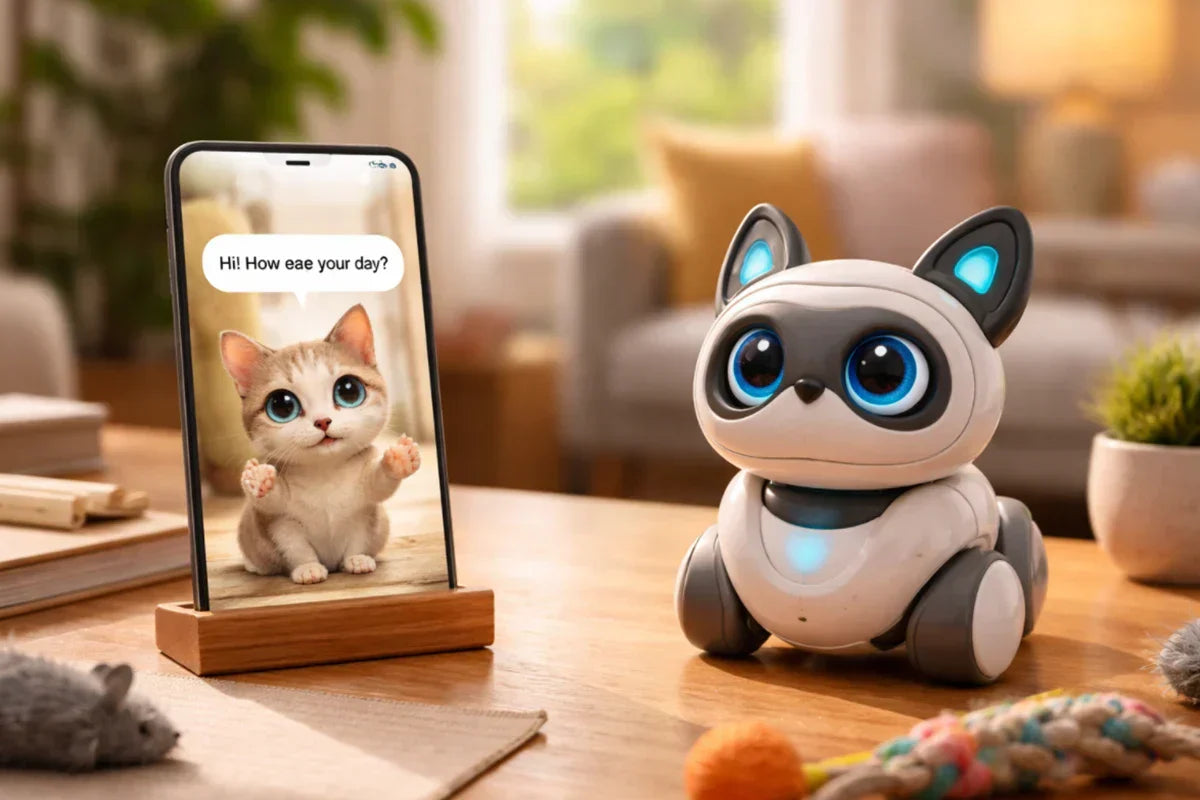
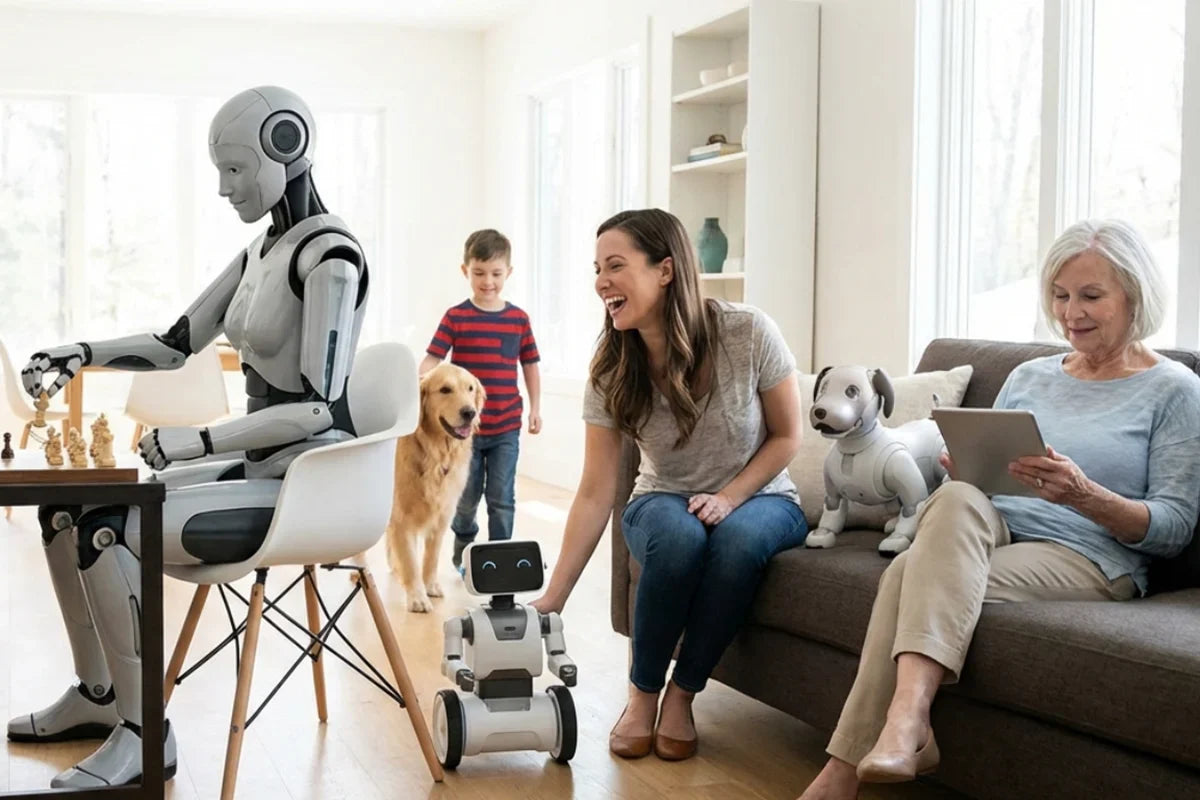
An AI robot companion is a purpose-built device designed to keep you company through conversation and “presence”—sometimes with movement, sensors, reminders, and proactive check-ins. Think: a friendly, interactive roommate that can talk, nudge habits, and respond to you in a more embodied way than a phone or smart speaker.
What it is:
-
A conversational companion that can chat, tell stories, play games, and respond with personality
-
A routine helper (reminders, schedules, wellness nudges)
-
Sometimes a mobile home helper that can move, sense the environment, or connect to smart home systems (depending on the robot)
What it isn’t:
-
A living being with needs, instincts, and true reciprocity
-
A guaranteed substitute for human relationships
-
Always a “local” device—many rely on cloud services for AI features, updates, and speech processing
Quick mental model: a robot companion can feel warm, responsive, even surprisingly “present.” But it’s still software + hardware. That difference matters.
Real Pet Basics: What You’re Signing Up For
If you’re weighing a robot against a real pet, you already know pets are wonderful. But let’s name the parts people underestimate.
Time and routine are non-negotiable
Even the “easy” pets need daily consistency—feeding, cleaning, attention, enrichment, and often exercise. Dogs add walking, training, and socialization. Cats add litter maintenance, stimulation, and vet visits. And all pets add “surprise moments” (the chewed thing, the puked thing, the mysterious limp).
Costs are not just food and toys
U.S. pet costs vary wildly by region and lifestyle, but several reports converge on the same reality: ongoing costs + unexpected vet bills are what catch people off guard.
-
ValuePenguin estimated 2024 spending at $1,248 for dogs and $836 for cats (projected annual spending per pet), and also estimated average spending per pet household.
-
A Wall Street Journal breakdown put annual dog ownership costs (ongoing) in a wide range and noted meaningful one-time startup costs.
-
Rover’s “True Cost of Pet Parenthood” report is widely cited in coverage of 2024 pet cost ranges.
Housing and travel can become the real constraint
Even if you can afford the care, you might not be able to afford the logistics.
-
RentCafe reported that a large share of rentals allow pets, but pet rent and deposits/fees are common.
-
Pets-and-housing research also highlights that “pet-friendly” often still comes with restrictions and fees.
If you’re thinking, “I love animals, but my life is chaotic right now,” that’s not a character flaw. That’s self-awareness.
AI Robot Companion vs. Real Pet — Side-by-Side Comparison
Here’s the cleanest way to think about it: a robot companion minimizes caregiving; a real pet maximizes aliveness.
| Category | AI Robot Companion | Real Pet |
| Emotional connection | Feels responsive; relationship is “simulated” | Living bond with real needs and reciprocity |
| Daily maintenance | Charging, updates, occasional troubleshooting | Feeding, cleaning, exercise, training |
| Total cost pattern | Upfront device + possible subscription | Ongoing costs + vet bills over years (ValuePenguin) |
| Allergies & cleanliness | Strong advantage (no dander, less mess) | Allergies, shedding, odor, cleanup |
| Predictability | Very predictable | Unpredictable (in both good and hard ways) |
| Travel flexibility | Easier (or portable) | Requires pet sitting/boarding |
| Longevity | Depends on support lifecycle, updates | Lifespan varies; long-term responsibility |
| Ethics | Data/privacy + emotional reliance questions | Animal welfare, time/attention obligations |
The real trade-off:
If you’re craving nurturing and purpose, a pet can be deeply fulfilling. If you’re craving companionship but can’t (or shouldn’t) take on a dependent animal right now, a robot companion can be a meaningful middle ground.

The 7 Questions That Decide It (Decision Quiz)
Grab a pen and score yourself. For each question, pick A or B.
-
You want your companion to be…
A) alive and independent
B) consistent and low-stakes -
Your schedule is…
A) stable most days
B) unpredictable / travel-heavy -
You feel about daily care like…
A) “I can do this every day.”
B) “Some days, I barely do me.” -
Your housing situation is…
A) pet-friendly and stable
B) complicated (restrictions, roommates, small space, frequent moves) -
Your budget comfort is…
A) ready for ongoing costs + surprise vet bills
B) prefer predictable costs (even if there’s a subscription) -
Allergies / cleanliness sensitivities are…
A) not a major issue
B) a real concern -
What you’re truly craving is…
A) the living bond and responsibility
B) company, conversation, presence
Your result
-
Mostly A → you’re likely a better match for a real pet (or fostering first).
-
Mostly B → an AI robot companion may fit better right now.
-
Split → consider the hybrid route below.
Best-Fit Scenarios
If you live in an apartment or “no pets allowed” housing
Even in markets where many rentals allow pets, restrictions and fees are common.
A robot companion sidesteps deposits, pet rent, breed rules, and roommate negotiations.
If you’re a senior living alone (or you’re supporting one)
There’s growing research interest in social robots and AI-enabled interventions for loneliness in older adults, including meta-analyses and systematic reviews.
(Important nuance: robots can help, but they’re not a replacement for human relationships and community. They’re best viewed as a supportive layer.)
If you have allergies, asthma, or sensory sensitivities
Robots don’t shed. They don’t trigger dander allergies. They don’t require litter, outdoor walks, or constant cleaning. For some people, that single factor makes the decision.
If you travel a lot or work unpredictable hours
The biggest cause of pet regret is usually not “I don’t love animals.”
It’s “I didn’t realize how much my lifestyle would fight this.”
If your weeks are volatile, a robot companion offers companionship without the guilt spiral.
If you want companionship but fear the commitment
A pet is a relationship with real dependency. If you’re not sure you can be consistent, choosing an AI robot companion can be the kinder option—for you and for any animal you might otherwise adopt.
What to Look for in an AI Robot Companion (Buying Checklist)
This section matters because the robot category is evolving fast, and some devices feel magical in demos but frustrating in daily life.
1) Privacy and data controls (non-negotiable)
If it has microphones/cameras/sensors, treat it like a connected device:
-
Can you mute the mic physically?
-
Can you disable the camera?
-
What data is stored, for how long, and where?
The FTC regularly emphasizes privacy and data security enforcement priorities, and connected products should be evaluated through that lens.
NIST also publishes consumer IoT cybersecurity guidance and baseline concepts that can help you think about “secure by default” features (updates, vulnerability handling, access control).
2) Reliability and support lifecycle
Ask: “If this company disappears, what breaks?”
-
Does the robot still work without the cloud?
-
Will it receive security updates?
This is not hypothetical—consumer robotics plans can change. For example, Samsung publicly announced Ballie’s AI direction and partnerships, but later reporting suggested uncertainty about its consumer release trajectory.
3) Interaction style: proactive vs. reactive
Some companions wait for commands; others initiate conversation and nudge routines.
Pick what matches your personality—some people love proactive; others find it intrusive.
4) Total cost: device + subscription + accessories
Subscriptions can be worth it if they fund updates and better AI, but they can also become “surprise rent.” Make sure you understand the monthly/annual commitment before you fall in love.
5) Safety and home fit
-
If it moves: how does it avoid stairs, pets, kids?
-
If it has cameras: where does it point, and when is it on?
-
If it has a screen/projector: will it actually fit your space and routine?
Real Pet Ownership Checklist
If you’re leaning pet, here’s a quick reality check—without guilt.
-
Time: Can you reliably give daily care even on bad days?
-
Budget: Can you absorb routine + emergency costs?
-
Support network: Who can help if you get sick, travel, or work late?
-
Lifestyle match: Energy levels, noise tolerance, training patience
-
Housing: Pet rules, fees, long-term stability
A great middle step: foster first. It’s the closest thing to a “trial period” that still helps an animal.
Conclusion
Choose an AI robot companion if you want steady companionship with low caregiving load, especially if your life includes travel, housing restrictions, allergies, or limited bandwidth.
Choose a real pet if you want a living relationship and you’re ready to commit to daily care, long-term costs, and the emotional responsibility of being someone’s whole world.
FAQ
What is an AI robot companion?
An AI robot companion is a device designed to provide conversational companionship and often routine support (reminders, check-ins, wellness nudges), sometimes using sensors or mobility for a stronger sense of presence.
Are AI robot companions good for seniors?
They can be—especially as a supportive layer for routine, engagement, and companionship. Research including meta-analyses has explored social robots and loneliness outcomes in older adults, with results depending on context and implementation.
Do AI robot companions work without Wi-Fi?
Some functions may, but many advanced AI features rely on cloud services. Always verify what works offline and what requires connectivity before buying.
Are robot pets better for people with allergies?
For many allergy-sensitive people, yes—robot companions don’t shed or produce dander, and cleanliness is easier to control.
What does pet ownership cost ?
Costs depend on species, size, and healthcare needs. Multiple reports estimate annual dog and cat spending can range from hundreds to thousands, and unexpected vet bills are a major factor.